The Menu Manifesto: How Manish Mehrotra and Shri Bala are Rewriting the Rules
What really is ‘tradition’ if it does not allow room for experimentation? And how is tradition leveraging its soft power with the Indian menu at the forefront? With insights from Chef Manish Mehrotra of Indian Accent and Chef Shri Bala of Nadoo
11 Jun 2026
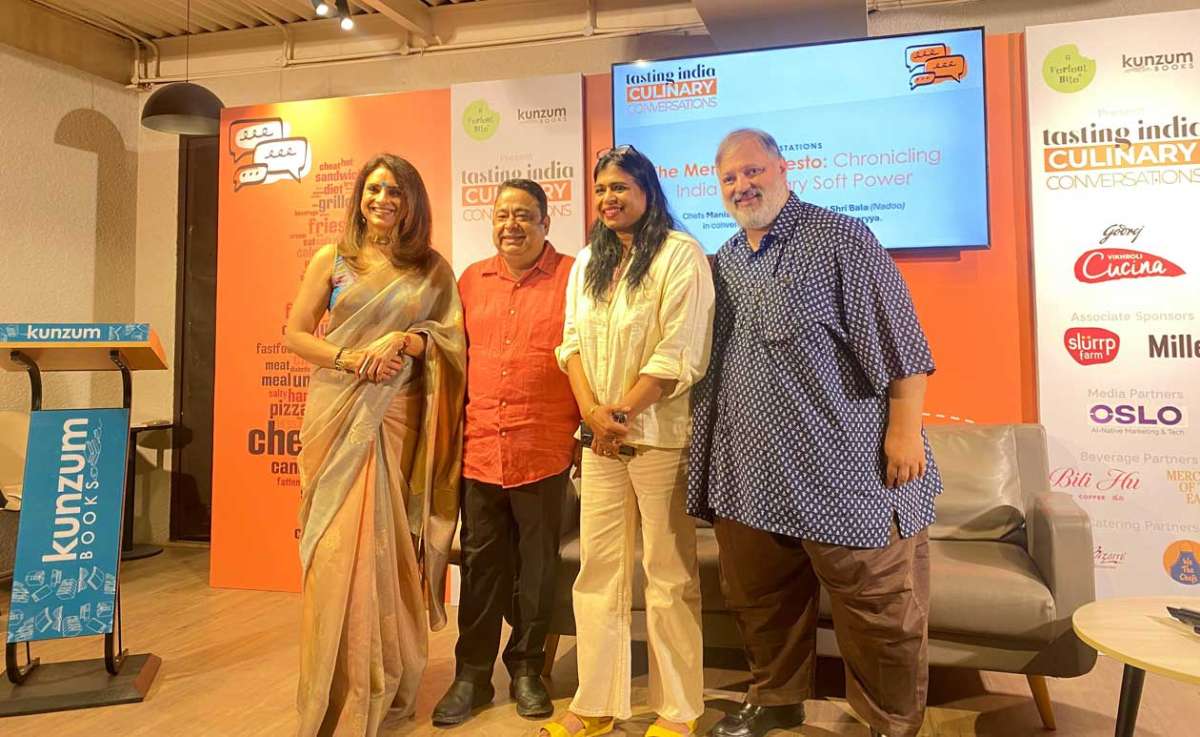
In the culinary scene, one thing sets us apart, and that is the constant innovation of cooking styles, borrowed, invented or reinvigorated from those already available to us. To some extent, owing to the gentrification of the ‘cafe’ scene, we are looking at some of the premium restaurants for that something ‘different,’ from the existing cafe fare. How can a menu offer something that sets itself apart to make a mark, when regular innovations and cross-country migrations are the norm of the table?
The experience of the menu has also run its course, what you may find today in the streets of Pali Hill, will only be marginally different from what you find in Rue Suffren in Pondicherry. Innovation is gutsy when people are already used to eating a certain way. Then how do we exercise our culinary soft power in an already saturated scene, that prefers the cafe fare, and how much does accessibility play into it?
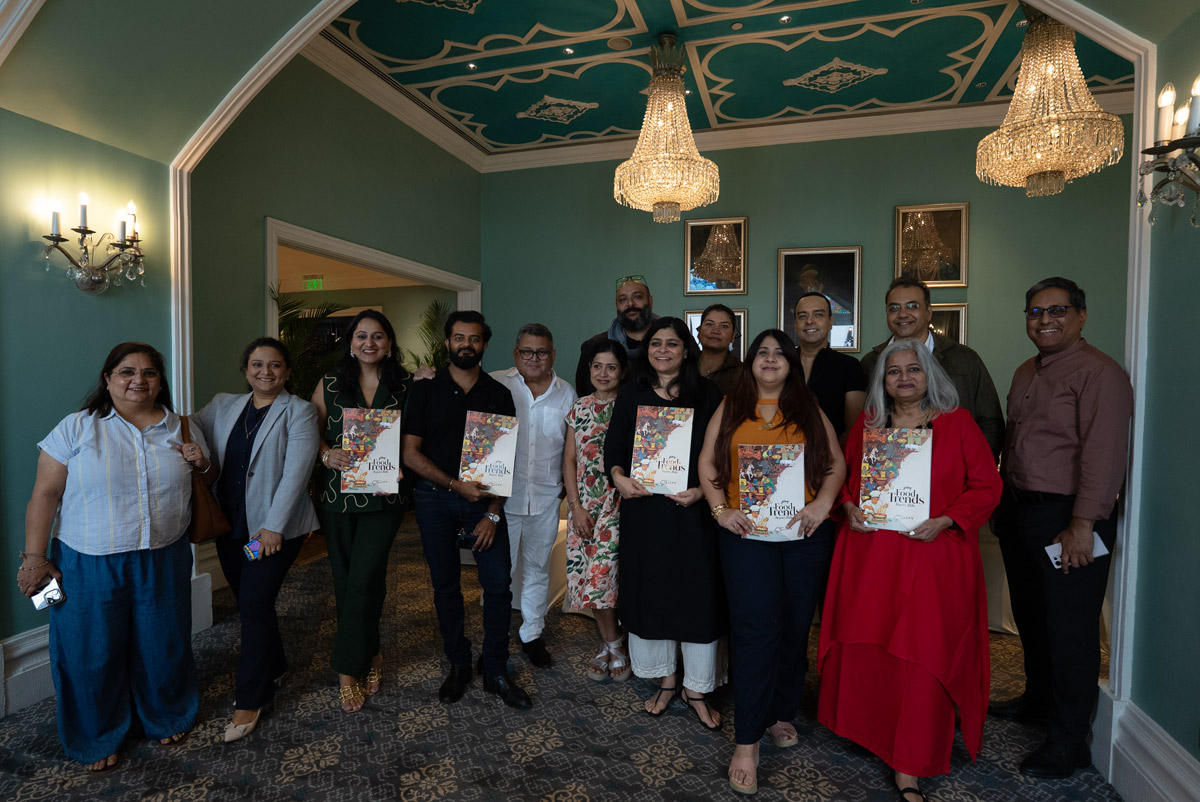
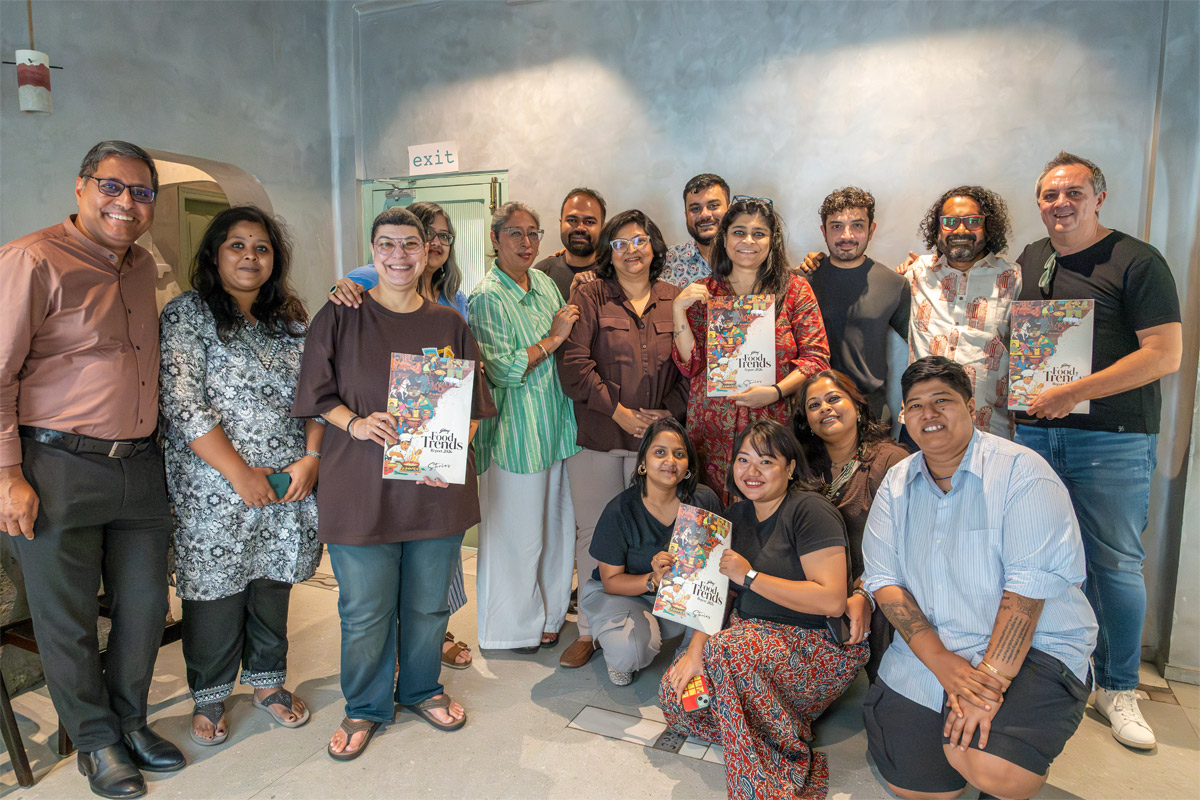
At the recent edition of Tasting India Culinary Conversations at Kunzum Books in New Delhi, the ‘Menu Manifesto’ panel brought together Chef Sri Bala of Nadoo and Chef Manish Mehrotra of Indian Accent and Nisaba for an insightful discussion on menus, creativity and the evolving Indian dining landscape.
Who brought the change to a largely predictable scene?
To see how the culture evolved, one should look at "The Menu as a Living Archive" section in the Godrej Food Trends Report 2026, "Historically, dining out in India was a functional necessity, for weary pilgrims and travellers. Its eating-out culture only took form during the colonial era. As dining evolved in the West, menus manifested from oral lists, dictated by the cook’s whims or the day’s market haul, into more formal bills of fare."
On his entry into the industry in 1996, Chef Manish Mehrotra recalls: "It has changed a lot. In 1996, fine-dining Indian food was still confined to five-star hotel restaurants. Otherwise, it was mostly street food; there were no standalone restaurants doing this. The five-star Indian restaurants had very similar menus, it was a cut-copy-paste approach. The menu would start with a shorba, tandoori subziyan, and some kebabs, especially in North India. Then there would be some curries. If a dish had coconut, it was automatically considered South Indian. The meal would usually end with kulfi or rasmalai. That was the standard Indian restaurant everywhere."
The shift started with chefs like Rahul Akerkar in 1997 and Shaun Kenworthy in 2000, who brought the era of "fusion." As Mehrotra explains, "I don't know exactly when what we call 'modern Indian food' began, but at that time, people used to cook fusion or rather, 'fusion-confusion'. If you look at who first incorporated Indian flavours with other cuisines, it would have to be Tarla Dalal, with her paneer tikka sandwiches and burgers. Later, chefs like Vineet Bhatia, Atul Kochhar and Vivek Singh started doing that kind of elevated food."
Not restricted to the Grill, anymore
What really is ‘tradition’ if it does not allow room for experimentation, must things really stop short of evolution for the lack of erstwhile indulgences? Some might say yes, some like Mehrotra are strong believers of the adaptation of the craft. And sometimes, you do need to break the rules after you master the fundamentals.
"I was not trained as an Indian chef," he says. "I was trained as a Pan-Asian and Thai chef, so I broke all the rules. People think certain meats must be cooked in a tandoor, but you can make a fantastic chicken tikka or a perfect biryani in a combi oven, and nobody can tell the difference. The tandoor itself doesn't have a flavour, and charcoal doesn't have a flavour. It's the juices that fall onto the charcoal and the smoke generated from it that give the food its flavour. I broke those traditional rules and started cooking Indian food with this understanding."
He insists: " You must know the basics and build a strong foundation. Recently, some culinary students were dining with us and talking about an assignment on modern Indian plating. I told them that before you can modernise it, you must master the fundamentals. Contemporary Indian food is simply the next evolution of what we have been cooking for generations."
Experimentation, narratives and ‘accidents’
As per the "Specialisation: The Menu as the Ultimate Communicator" section of the report, "The 2010s and '20s ushered in a book for the restaurant industry. The fine dining sector saw the rise of the 'restopreneur' and 'standalone' restaurants, prioritising refined techniques, imported ingredients, bespoke experiences, and elevated menu aesthetics."
Aslam Gafoor says, "Menus transformed from simple catalogues into narrative driven offerings — detailing ingredients, descriptions, theme and philosophy — and inviting diners to explore a restaurant's culinary identity."
When Mehrotra opened Indian Accent in 2009, his approach was initially met with shock. He recounts with a laugh: "We received a lot of different comments in the beginning. People said, 'This is not Indian Accent, this is an Indian accident! Why are you killing Indian food?' They complained that we were in Delhi but didn't have butter chicken or serve free papad. I took it as a learning experience. We started serving papad, but we offered a curated 'Papads of India' platter, with at least ten different types of papad with matching dips."
Mehrotra also stresses on this very need for experimentation to take things forward, "Experimentation is the only thing that can take a cuisine forward," he argues. "New dishes will only be invented through experimentation. What we consider a 'traditional' Indian dish today was modern or fusion food in 1947. Similarly, what you call modern or fusion today will be considered a traditional Indian dish 50 years from now. You have to keep experimenting with Indian food."
Modern ‘trends’ also often have roots in India: "In India, we already had everything. Take protein snacking, for example. The word 'farsan' means snacking, and most farsan is made with besan (gram flour), which is rich in protein. We have been doing ‘savoury’ protein snacking for thousands of years! If we recognise this and keep experimenting, the cuisine will continue to move forward."
On his legacy menu ‘innovations’
Few things are as iconic as menu innovations that weren’t received well initially, but became the talk of the town after
On the famous Blue Cheese Naan, he shares: "The first time I tasted blue cheese, I thought, 'Who eats this spoiled, rotten cheese?' But it grows on you. There are so many stories about the blue cheese naan at my restaurant. Once, a very sweet lady called me over and whispered in my ear, 'The cheese inside your naan has gone bad. Change it, and don't serve it to anyone else.' I went inside quietly, made a naan with Amul cheese, brought it back, and told her I had fixed it. Another time, a police officer came in with his wife. When he tasted the blue cheese naan, he got so angry and shouted, 'How can you serve rotten food?' He left without eating. But that blue cheese naan became iconic. When I opened a new restaurant later, I didn't put it on the menu initially, but guests demanded it so much that I had to bring it back. I’ve even sent a blue cheese naan cake to someone for their birthday!"
Of foie gras galoutis and achari spare ribs
On the Foie Gras Galouti, he reflects: "When I came back from London to start Indian Accent, I was fascinated with foie gras. I started putting foie gras in everything. I wasted kilos of it trying to cook it in the tandoor; whenever I put it on a skewer, it would melt and fall off. Eventually, I thought of combining it with galouti kebab. It was a perfect match. The galouti is already a delicate, melt-in-your-mouth dish, and foie gras is similarly rich and delicate. Pairing them together and cutting the richness with a strawberry and green chilli chutney, just completely elevated the dish."
On his iconic Achari Spare Ribs, he reveals: "That idea came from my training in Southeast Asian cuisine. Whether you are in Southeast Asia or Texas, spare ribs are almost always paired with a sweet flavour, because the fatty richness balances perfectly with sweetness. I decided to use a sweet grated mango pickle, similar to a Gujarati chunda, but infused with achari spices like kalonji (nigella seeds) and saunf (fennel). It worked fantastically well with the pork ribs."
Nadoo and the revival of Sangam cuisine
This "playful, finessed, driven exploration of reimagined flavours" mentioned in the Godrej Food Trends Report extends to Chef Shri Bala’s menu innovations too, of Nadoo in New Delhi.
"When it comes to the South, we have blocks," Shri Bala noted. "We are only called 'idli dosa' people. As Chef Manish was saying, people think if you just put coconut in it, it becomes South Indian. That stereotype is still there, even today."
Chef Shri Bala has embarked on a mission to map the food history of the ancient Chola dynasty and Sangam literature to a modern dining experience. With no existing culinary roadmap, she collaborated directly with history and archaeology departments. "Every day, I would take one segment, read the poem — and that would be in very difficult, ancient Tamil — decipher the poem, and then take notes," she explained. "I started curating food entirely from Sangam literature. For instance, to get just one recipe or one ingredient, I would have to read about seven to eight poems."
Not all that vegetarian
This rigorous academic approach makes us totally rethink modern assumptions about South Indian diets. "When you go back 3,000 years, the most eaten food was not vegetarian; it was non-vegetarian," she revealed. "Anything which moves was on the menu of the Sangam folks." She discovered texts detailing potent ancient alcohol derived from reptiles, and regional practices like Telangana's festive meals where idli and dosa are entirely absent, replaced instead by elaborate, heavy preparations using the entire goat, including offal.
Of her arrival and interesting etymologies
But it is also interesting just how she arrived there. "I am from a very orthodox family where even onion and garlic were not part of our cuisine," she shared. Urged by Chef Ashish Bhasin to explore non-vegetarian cooking to expand her repertoire, she had to navigate this new world in secret. "Getting non-vegetarian food into my home was very difficult. So, I used to go to my friend's place, try, and learn about butchery. Everything was new for me."
She also brought the forgotten nuances of Thanjavur Maratha cuisine to the forefront. "There is something called Dangar," she shared. "It is a pachadi (raita) made with urad dal. You have to roast the urad dal to a golden brown, powder it, and cook it along with curd until the rawness goes. Because of the Thanjavur Marathas post the 1600s, potatoes came into the food, so potato was added to this pachadi."
She also spoke about the linguistic and culinary cross-pollination in dishes like Kathirikai Rasavangi. "'Vangi' means brinjal in Marathi, but because it is a blend of Tamil and Maratha cultures, we add the Tamil word for brinjal and call it Kathirikai Rasavangi," she explained. "It's literally like saying 'chai tea'. Maratha culture has completely entered Thanjavur cuisine."
The star of the show, Podi Idli with caviar
Yet, to elevate a menu and craft the "theatrical dining" experience that diners now crave, it requires a push into the avant-garde. Her partner constantly challenged her strict, traditional boundaries as a Chartered Accountant turned Chef: "He would walk in and ask, 'What is that exotic thing you're going to put on the menu? You have to move out of the comfort zone and give them something very wild.'"
This inspired one of Nadoo's most talked-about modern innovations: Podi Idli with Caviar.
"Podi Idli is my grandmother's recipe," she shared. "I brought that into Nadoo. Suddenly, I felt that if I put caviar on the Podi Idli, the flavour was going to be all over the place, but ultimately, there would be a method to the madness. That is exactly how we ended up creating Podi Idli with Caviar. It was totally an accident, but it became a very, very unique item on the menu."
What can we look forward to?
Through these narrative-rich innovations and as per the "Engineering: The Architecture of Menu Consumption" section, "The modern engineered menu is a strategic asset, generations removed from the functional, static lists of the past. No longer a mere inventory of food, it demands serious investment of intellectual capital and financial resources."
And it is this deliberate rethinking of the menu that serves a higher purpose, greater than even combating the cafe fare fatigue: Chefs like Mehrotra and Shri Bala are refamiliarising us with our heritage.
Whether it is reinventing ‘tradition’ with modern appliances and cooking methods or it is the actual revival and modern adaptation of recipes, once restricted to the scriptures, our cuisine's status is not as passing as a trend, but a soft power shaped by intellect, experiment and intent.
Read the ninth edition of the Godrej Food Trends Report 2026, here.
Rate this story:
Tags
Godrej Food Trends Report
Indian Accent
modern Indian cuisine
Chef Manish Mehrotra
Chef Shri Bala
Nadoo
0 Comment
You may also like
-

Features This is what Ganesh Chaturthi tastes like in a Konkani home
by Vikhroli Cucina -
Features Mumbai: A First Look Inside the Future of Indian Dining
by Vikhroli Cucina -
Features Mapping the next decade: Rushina Munshaw-Ghildiyal on the road to GFTR 2027
by Vikhroli Cucina -
Features How Eleftheria is Putting Indian Cheese on the Global Map
by Vikhroli Cucina