Inside the Making of the Godrej Food Trends Report 2026 with Rushina Munshaw-Ghildiyal
For years, the Godrej Food Trends Report has spotted massive culinary shifts long before they became commercial clichés. This year, the focus pivots to human narratives. Read insights from Godrej's Michelle Francis and GFTR Editor-in-Chief Rushina Munshaw-Ghildiyal on why 'storytelling' is the ultimate food trend
01 Jun 2026
How do you map the culinary DNA of over a billion people? When it comes to culture-defining food trends or setting strong precedents in the F&B space, be it restaurants, QComm, or aggregators, with the force of millions over millions of cuisines driving us, we are no longer looking westward (or even eastward, for that matter) for inspiration.
In this space, India is now spearheading a revival of ancient cooking traditions, hosting global conversations, reviving heirloom crops, and redefining the concept of the home kitchen.
But what does it take to track these cultural shifts, happening year on year, with new entrants emerging daily. This mammoth task requires a keen ethnographic ear to the ground.
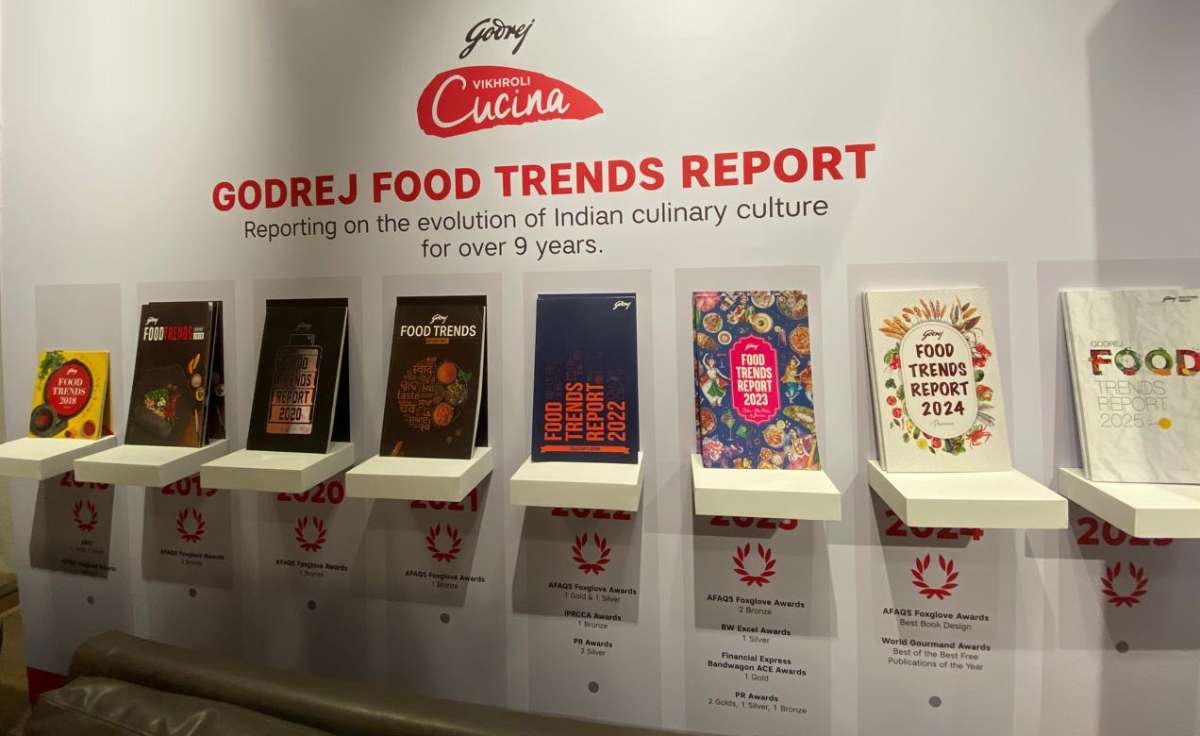
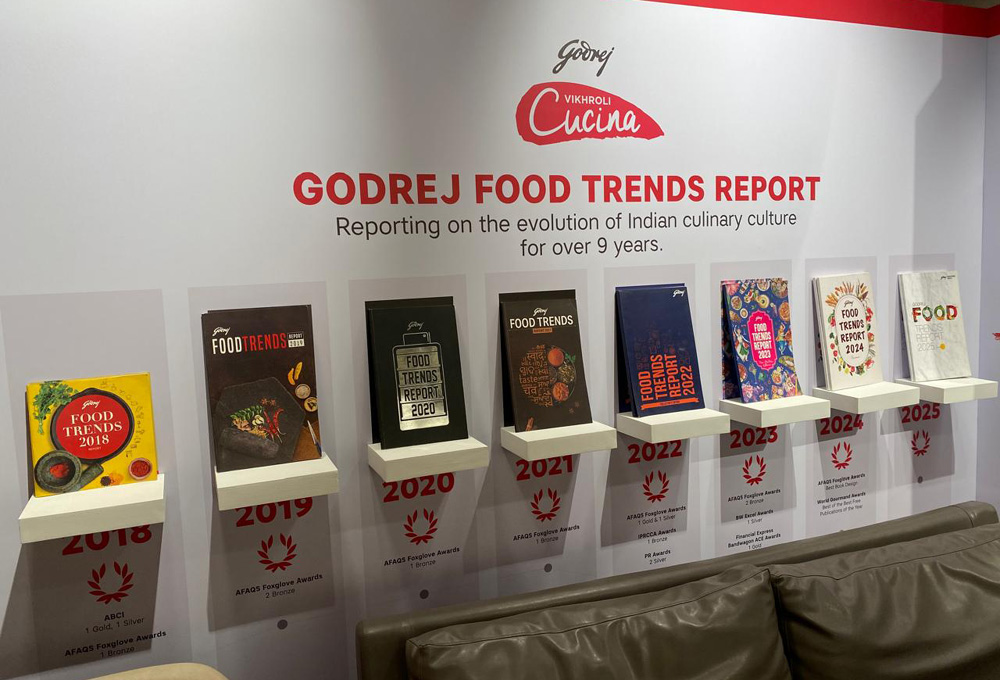
When the monumental Godrej Food Trends Report (GFTR) first launched in 2018 under the Vikhroli Cucina platform, it was a modest 60-odd-page observation. Today, as it approaches its landmark tenth edition, the Report has evolved into an exhaustive annual industry blueprint, drawing from the qualitative and quantitative insights of over 200 chefs, restaurateurs and culinary professionals across India.
To understand the mind and mechanics of this undertaking, we look at the structural choices guiding its curation, the evolution of its thematic arcs and the human conversations that dictate how India eats today.
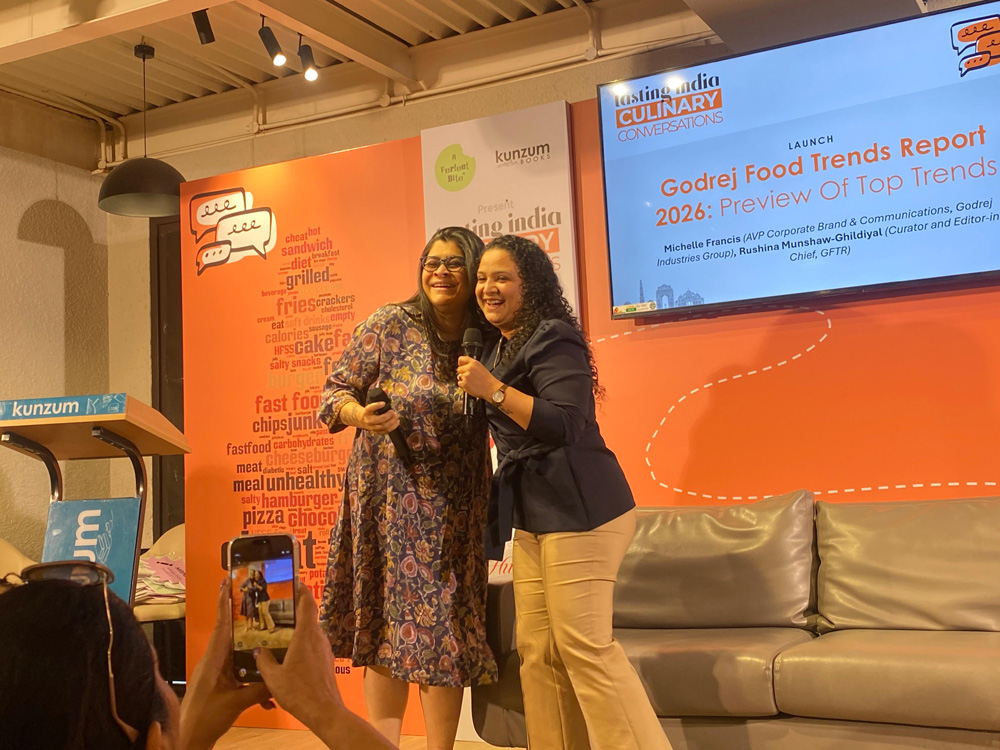
Michelle Francis, AVP, Brand & Corporate Communications at Godrej Industries Group, explains, the group’s footprint in Indian households carries an inherent responsibility to observe, decode and preserve domestic foodways.
"Most of you will be aware that Godrej owns a large share of the kitchen," says Michelle. "Then when we were having this discussion with Rushina, we said that when we are already scrutinising the plate so much, and when we are so close to the plate, it's only important for us, and it's our responsibility overall to also pay attention to what's changing in the plate."
And perhaps it is this close proximity to the domestic plate and Godrej’s close association with the country’s most renowned chefs and home chefs that has allowed the GFTR to spot shifts long before they become commercial clichés. And it is fitting that the report is designed to be predictive rather than retrospective.
"We said that we want to spot these trends and build on them before they become too obvious and understand where they are coming from and where they are heading," Michelle notes. "When India was binge-watching K-dramas, we said K-food is coming, and there it was, K-food is here, in a big way. When the whole narrative around healthy eating and nutrition in India was changing, at that time our report clearly mentioned that millets were going to be mainstream, and there you have it. You now find millets on all the menus now."
But what’s most interesting is how the 2026 report marks somewhat of a pivot from data to human narrative. Under its theme of Stories, it attempts to analyse the emotion of shifting consumption patterns.
"This year's report is very close to me," Michelle shares. "I really love the theme of the Report—'Stories,' and I find this edition more human because we're not only mentioning data and trends and facts in the report. We're bringing the meaning behind those trends. What is India eating, and why? But more importantly, who's growing the food? Who's cooking it?"
"One trend that's very close to me: female farmers have got the spotlight in this Report, the much-desired spotlight. Another interesting trend is around savoury protein, and I'm really looking forward to indulgent savoury protein going forward. We also see a shift in the Report around pet nutrition and conversations around pet nutrition, and that's clearly telling us the definition of family in India is expanding."
What really goes into the making of this Report?
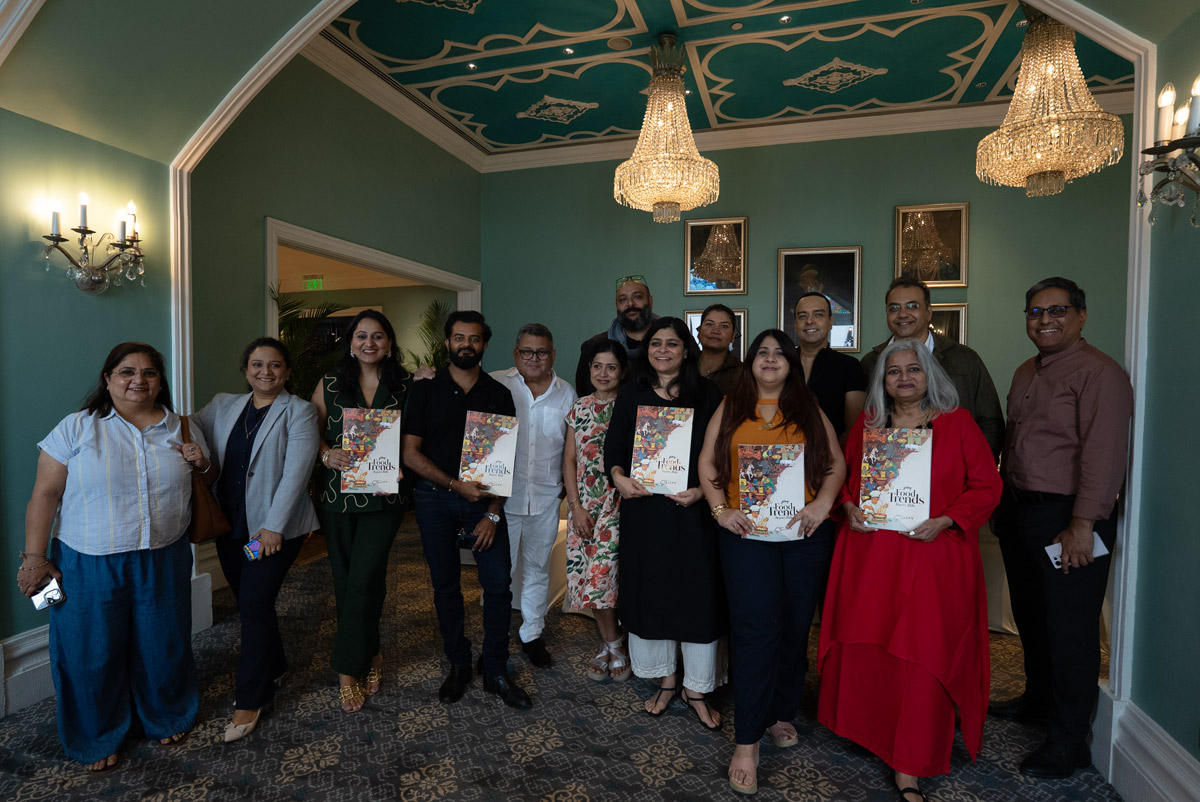
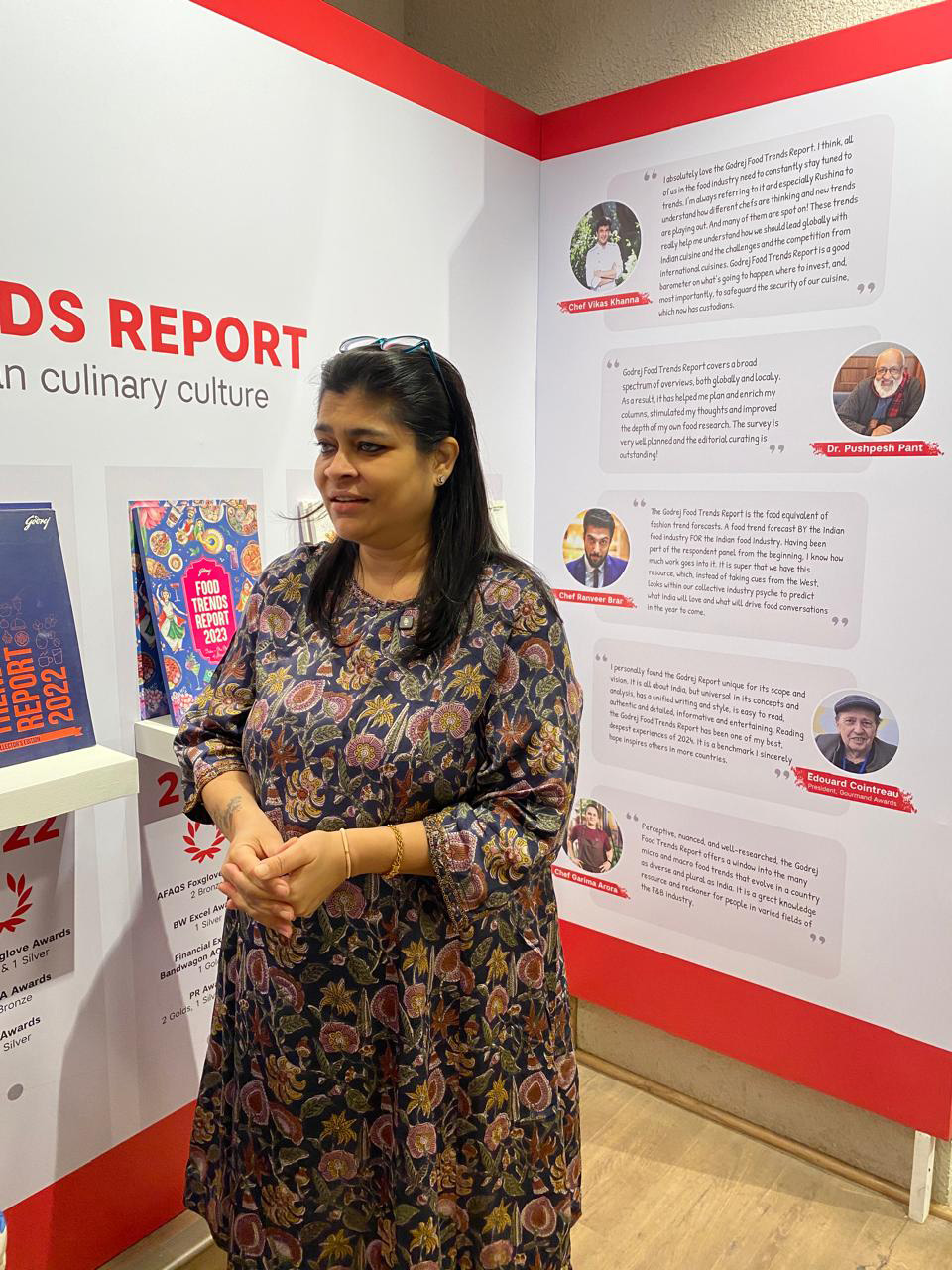
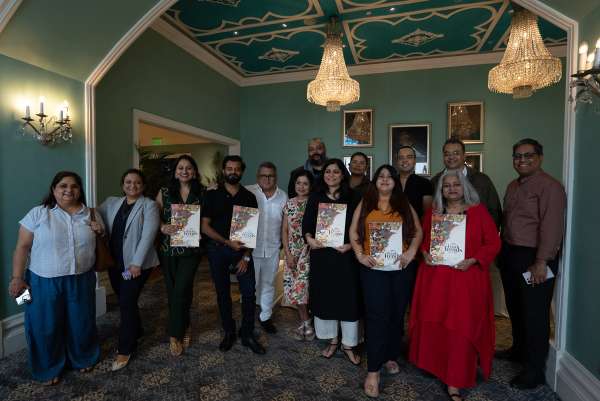
And so, at the sidelines of this year’s Report’s much celebrated launch at Kunzum Bookstores, New Delhi, part of the Tasting India Culinary Conversations, we spoke to Rushina Munshaw-Ghildiyal, the editor-in-chief of the Godrej Food Trends Report. For the last ten years, her marquee project has been curating the GFTR.
For the upcoming edition, Rushina identified that the industry is currently defined by a specific human nuance: storytelling. Humans are the only species that conceptualise and share stories, and historically, food propagation has relied entirely on narrative. If an ancestor didn't tell a story about an ingredient's medicinal or nutritional value, its seeds would never have crossed borders.
Today, this narrative focus is acting as an antidote to ‘digital fatigue.’ The Report notes that consumers, overwhelmed by the internet, are seeking a digital detox and returning to tangible formats. They want to hold onto memory, which manifests in a desire for traditional recipes and native ingredients.
However, this nostalgia is firmly rooted in the realities of modern life. As Rushina points out, modern consumers are pulling from the past but executing it through mindful convenience. They don't have the time to cook the way their grandmothers or grandfathers (or even parents, for that matter) did, so instead they are using high-quality, pre-made products and shortcuts to recreate those memories.
This desire for authentic narratives has also radically altered the concept of provenance. In the immediate years following the pandemic, the Indian food industry pivoted from looking outward, geographically, to looking inward. Initially, this was a macro exploration. But recently, it has become increasingly micro-regional.
"Earlier, when people spoke about millets, it used to be jowar, bajra, nachni," Rushina observes. "Now it is specifically local, indigenous millets. If you are talking about rice, earlier it was basmati in the north and idli rice in the south. But today, people know about kalabhat, they know about gobindobhog, they know about seeraga samba and they're going beyond that into specific native varieties of black rice or bamboo rice. That digging deep into individual ingredients is changing the narrative of what food is playing out like in India."
Let's start with the methodology. What exactly goes into the making of this Report?
Rushina Munshaw-Ghildiyal: The GFTR is a qualitative and quantitative survey that we drive pan-India. We reach out directly to the industry — unlike many reports built just on last year's sales, ours is built on inputs from several F&B professionals. Today, the survey goes out to approximately 800 people, and we average about 250 to 300 deep-dive responses.
We are actively interviewing over 200 chefs, restaurateurs, food writers and thought leaders. It calls for that person to spend a good half-an-hour to 45 minutes answering a questionnaire of about 10 to 12 questions. In those questions, they pick their top three out of a list of options, and then they give us their qualitative insights on why they selected those things. They are very kind; they might complain about the time it takes, but they always fill it out!
It’s here that we catch the pulse of what the industry collectively feels is going to be popular. You really see elements of this when chefs speak to us about what they're doing with new ingredients, or when people speak about what they want to see. And from 2022 onwards, we realised we needed to add even more nuance, so we started having essayists do deep-dives into the topics that were coming out on top in these interviews.
You’ve spent the last several years crafting a narrative arc culminating in the tenth edition. How did the sequence lead up to "Stories"?
Rushina: When we started working on this back in 2022, looking toward the 10th-edition, the fundamental question that came up is: Why does India specifically eat the way it does? To answer that, we had to figure out how we arrived here.
We had to break down what makes Indian cuisine. First of all, Indian cuisine is historically looked at as a monolith, but actually, there is nothing like "Indian cuisine." There are hundreds of cuisines that belong to the regions of India and share some basic threads.
So, I went back to the drawing board. Our 2023 Report explored the Atlas of Food, the unique geography, landforms and incredible diversity of climate that dictate our raw agricultural baseline. Then we moved to Provenance, and then to Seasons, how climate drives seasonal diets and changes what the land gives us. Cuisine is made of these elements: what the land gives you, what the seasons drive, and then the layer of culture that humans do and pick up.
That is where we are at with Stories. Human beings are the only species that can tell a story. Stories are what drive us. Historically, when a new ingredient arrived in a region, if someone didn't tell a story about its value, its medicinal properties, or how to eat it, it wouldn't have been propagated.
Our 2023 Report explored the Atlas of Food, the unique geography, landforms and incredible diversity of climate. Because of this, India is unparalleled in plant-based food. Then we moved to Provenance, and then to Seasons. I
That naturally brings us to Stories. Cuisine is made of these elements: what the land gives you, what the seasons drive, and then the layer of culture that humans do and pick up.
The meaning of provenance is also completely evolving to include new things in our time. How is that playing out practically?
Rushina:
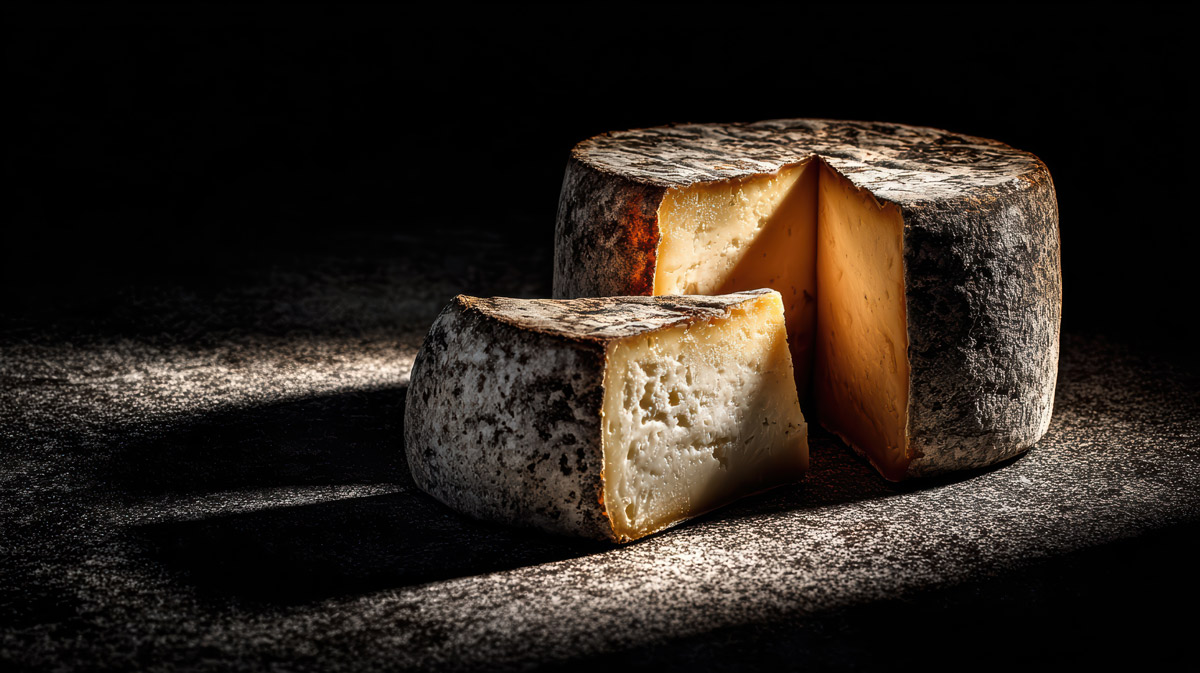
Today, the meaning of provenance is evolving to include entirely new crops. We are planting olives and producing Indian olive oil. We are growing cocoa beans and coffee in new ways. And cheese! Dairy was always rich here, but we didn't traditionally make cheese. Today, almost every metro has artisanal cheesemakers, and four or five of our Indian cheeses have actually won on an international global scale.
How does this micro-provenance translate into a restaurant setting?
Rushina: A couple of years ago, I did a pop-up with the restaurant Ishaara where I wanted to promote the diversity of rice and dal in the form of khichdi.
We came up with the idea of tadkas (tempering). The story became the tadka! Ghee tadka is the most basic thing in a khichdi, but we made that the centre of focus. We told stories of the various different types of tadkas that happen across regions, based on what the khichdi and the grain were. Within that, we told the story of the provenance of the rice. We had one rice on the menu called Tulsiya, which Triple O Farms had revived from just a handful of grains that were left. Those things already existed, but we brought them back into focus through the story of their origins.
Are you seeing any other historical ingredients that have a really high ROI in terms of storytelling or sales for brands right now?
Rushina: Makhana (fox nuts) is probably the biggest one. You see it everywhere, in every other store. Amla (Indian gooseberry) is another one being talked about a lot for its high vitamins.
How has the concept of home cooking and home chefs evolved over the years?
Rushina: From around 2017, we saw the home chef movement start with a few select pop-ups. It went up, then there was a dip just before the pandemic. But during the pandemic, it shot up because there were no more restaurant options available.
Secondly, there was this whole movement where people had gone back to their native places, and they started discovering their own food. Even big chefs were going home and discovering their own regional foods. Post-pandemic, everything settled down, but home chefs and pop-ups have become a permanent fixture.
You’ve also written about the evolution of the physical home kitchen. Many households are dealing with rising LPG costs. What physical shifts are you observing inside the domestic kitchen today?
Rushina: To be clear, it is not "old cooking" in the nostalgic sense, because people are switching to induction at home. But because of the rising cost of LPG, they are bringing back economical ways to cook without using gas. Things like steaming, for example. People are steaming a lot more in the pressure cooker.
Traditionally, in many regions in India, the pressure cooker was designed for efficiency. In a Gujarati house, for example, your pressure cooker would have three compartments. Your dal, rice, and sabzi would be pressure cooked together. You saved on resources because in your one cooker, all the major elements of the meal were done. That is making a comeback now, and it might stick around because people are realising this is actually a highly efficient way to cook.
We're seeing an interesting tension between this desire to cook traditional food and a need for absolute convenience.
Rushina: Convenience has always driven how things work. I know I can order home-cooked food off Swiggy, and that is one aspect. But we are starting to look for convenience with mindfulness.
As opposed to instant noodles, people are looking at millet noodles.
This individualisation of diets must make preparing a single-family dinner nearly impossible.
Rushina: There used to be a time when the whole family would sit down and there would be dal, roti, and sabzi, and everyone would be okay with that. Today, four different people in the same house might eat four different types of things. Meal times and snack times are becoming highly individualised, and that is driving a massive amount of innovation.
Interviewed by Dhruv Nimbalkar.
As the Godrej Food Trends Report steps toward its milestone tenth edition, it does more than compile a yearly list of what we eat; it charts how a society remembers, adapts, and cooks with these stories. It reminds us that our plates are never static. It’s a reminder that everything we eat is a living archive of the geography that nurtured it, the seasons that shaped them, the hands that cooked them, and the stories we tell to keep those memories alive.
Read the ninth edition of the Godrej Food Trends Report, here.
Rate this story:
Tags
Godrej Food Trends Report
Provenance
Global Food Trends 2026
Culinary Storytelling
home cooking
Indian Food Industry
0 Comment
You may also like
-

Features This is what Ganesh Chaturthi tastes like in a Konkani home
by Vikhroli Cucina -
Features Mumbai: A First Look Inside the Future of Indian Dining
by Vikhroli Cucina -
Features Mapping the next decade: Rushina Munshaw-Ghildiyal on the road to GFTR 2027
by Vikhroli Cucina -
Features How Eleftheria is Putting Indian Cheese on the Global Map
by Vikhroli Cucina