Forget the crash diet: Why winter is the season of Undhiyu?
Winter is about going back to the roots, literally! We explore the season of kand (tubers) and the restorative art of slow cooking roots, ratalu and suran
28 Jan 2026
The first week of January usually calls for fitness resolutions, healthy eating and complex carbs are thrown in the bin. What if we told you that there’s more to this season, that there is ancient wisdom here that goes back to our roots, literally.
For the more traditional Indian kitchen, winter is rarely a time for deprivation. The shishir ritu is a time when the body’s digestive fire (jataragni) is naturally robust. And naturally, the body would demand more than leaves and light salads.
Season of the tubers
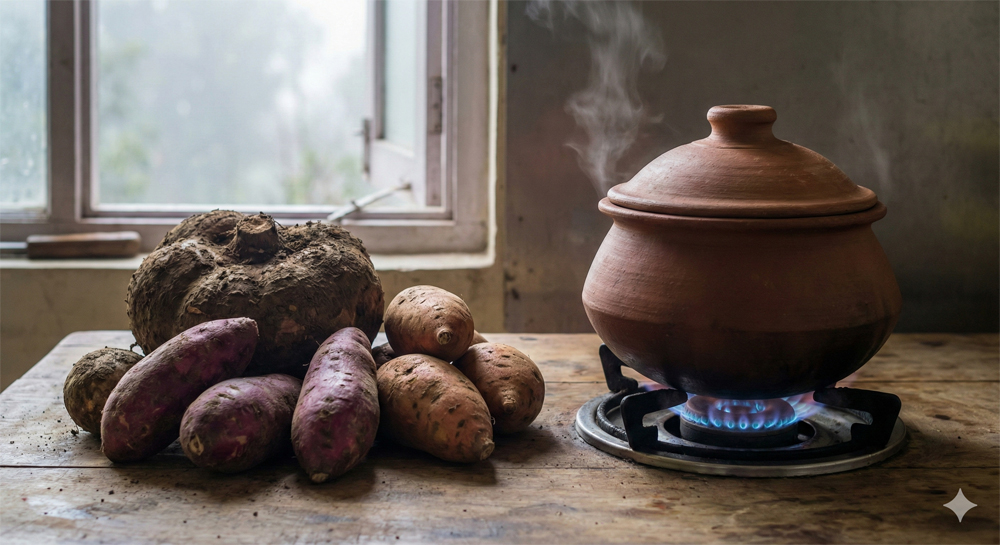
In the Indian pantry, this is the season of kand, the tubers, yams, jagged, dirt-caked roots that have spent months absorbing the earth’s nutrients. The purple yam (ratalu), the elephant foot yam (suran) and the sweet potato sShakarkandi) arrive in our homes covered in soil, requiring scrubbing, peeling and above all, patience.
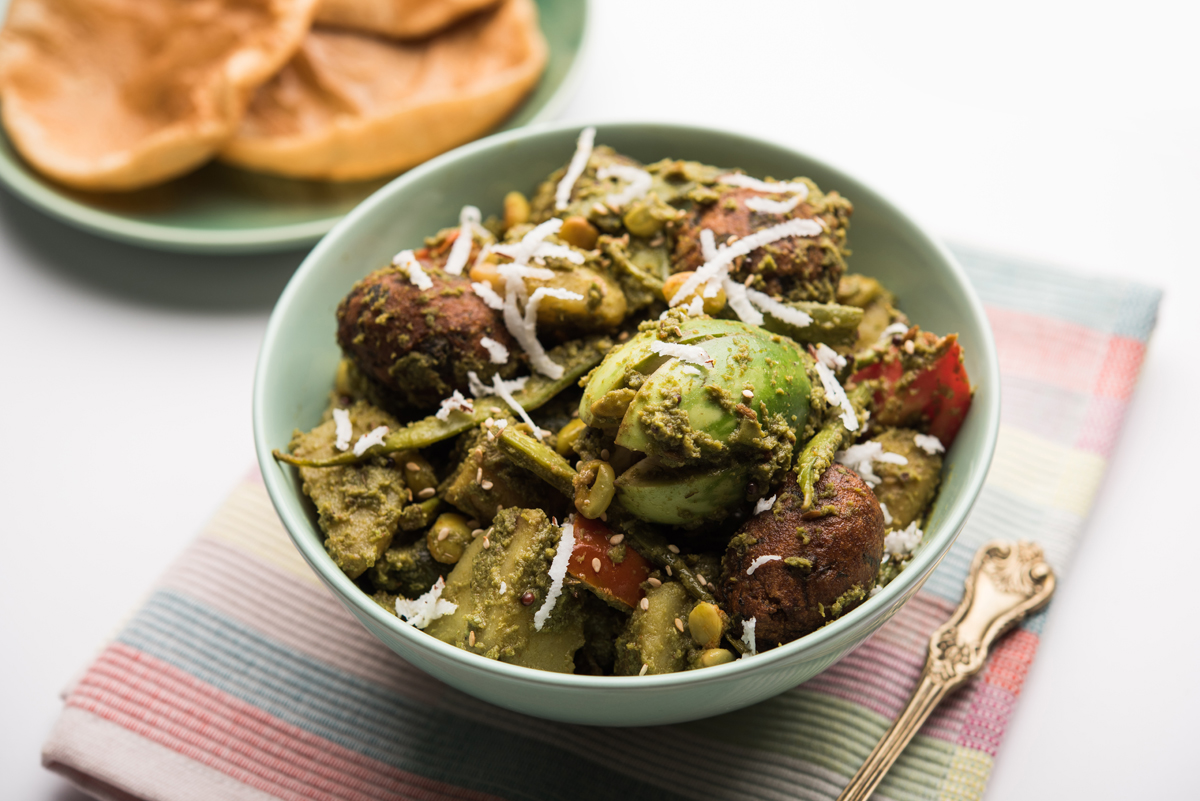
In Gujarat, it is the undhiyu season. It is a pot of green garlic, winter beans and roots cooked upside down in earthen pots. It is heavy, rich with oil and the cooking is slow and restorative.
Consider the Dum Pukht technique. Sealing a pot with dough (purdah) to trap steam. Clay is porous; it allows heat to circulate gently, coaxing the moisture out of the roots and returning it to the dish.
There is a meditative quality to this. You cannot rush a clay pot on high flame or it will crack. You must slow down.
The chopping of the suran, the shelling of winter peas, the waiting for the steam to smell like roasted cumin, this is restorative. A counter to the crash diet.
So, here are two unique recipes with such yams.
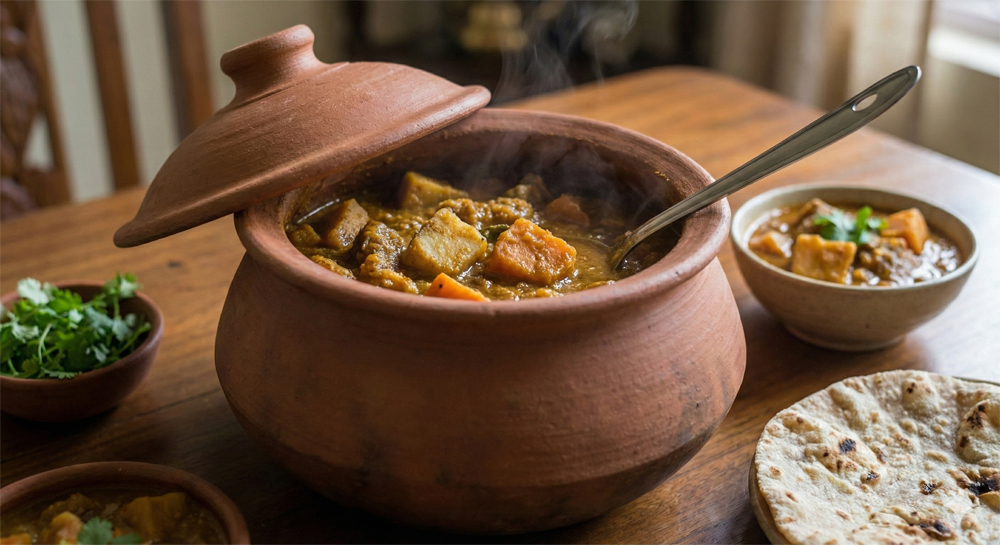
Ratalu (purple yam) and Fresh Toovar with Green Garlic
Ingredients:
- 500g Purple Yam (ratalu), peeled and cubed large
- 1 cup fresh Pigeon Peas (green toovar)
- 1 cup fresh coriander, ½ cup fresh green garlic (whites and greens), 4 green chilies, 1 inch ginger blended to a coarse paste with 1 tbsp lemon juice.
- 1 tsp carom seeds (ajwain), pinch of asafoetida (hing).
- 3 tbsp peanut oil or mustard oil.
Method:
- Heat oil in a clay pot until smoking/shimmering. Add carom seeds and hing; wait for crackling.
- Add marinated vegetables, gently coating them in oil.
- Cover pot tightly (weigh down lid if loose). Reduce heat to the lowest setting.
- Cook for 35-40 minutes. Steam from coriander/garlic cooks the yams. Stir halfway. Ratalu is done when easily pierced but retains shape.
Dum Suran (Yam in Spiced Yogurt)
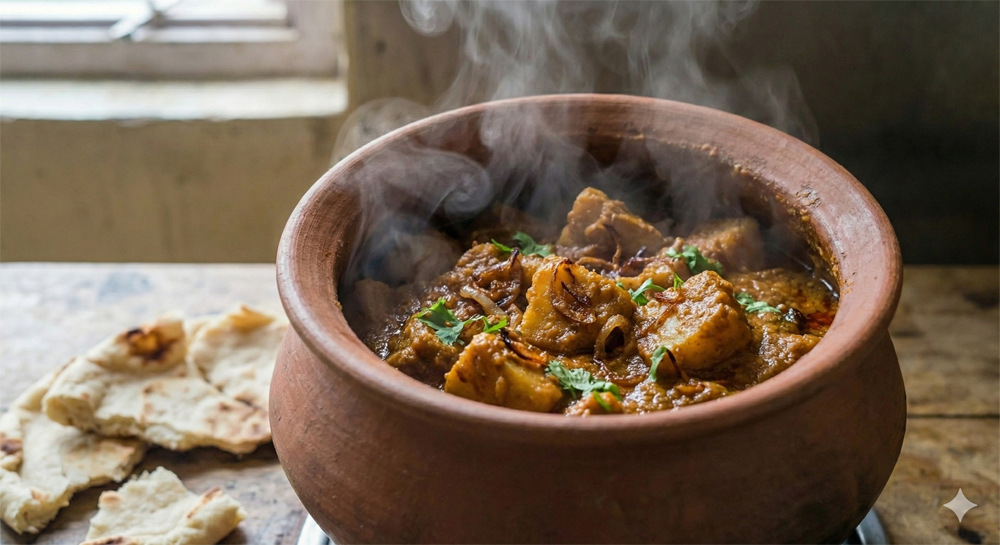
Ingredients:
- 500g suran, cleaned, cubed, and par-boiled with tamarind water.
- 1 cup thick yogurt, whisked.
- 2 onions, thinly sliced and fried until golden.
- Whole: 1 black cardamom, 2 cloves, 1 cinnamon stick.
- Powdered: 1 tsp red chili powder, 1 tbsp coriander powder, ½ tsp garam masala.
- Ghee for cooking.
- Wheat dough for sealing the lid.
Method:
- Heat ghee. Add whole spices, then whisked yogurt. Cook until fat separates, stirring constantly (low flame to prevent splitting).
- Add par-boiled suran, crushed fried onions, powdered spices, and salt. Add a splash of water for steam.
- Cover and seal the lid with wheat dough for true Dum.
- Place the pot on a tawa (griddle) over low heat. Cook undisturbed for 25 minutes.
- Break the seal at the table. The suran should be buttery with a thick, rich masala coating.
Which yam or tuber are you cooking this winter season? Let us know in the comments!
Rate this story:
Tags
Vegetarian recipes
winter recipes
Traditional Indian Food
slow cooking
Root Vegetables
Tubers
Ratalu Recipe
Suran Recipe
Ayurvedic Wisdom
Seasonal Eating
0 Comment
You may also like
-
Kitchen stories Every way tuna earns its place in the kitchen
by Vikhroli Cucina -
Kitchen stories The 9-to-5 protein playbook: Your full-day menu (No supplements needed)
by Vikhroli Cucina -

Kitchen stories The budget bougie star: Is cabbage the new steak?
by Vikhroli Cucina -
Kitchen stories Dieting is out, Fibermaxxing is in: Here’s how you can Fibermaxx your everyday meals
by Vikhroli Cucina