From Kohima to Kochi: What India cooks at home during the holiday
Is hyper-local the new global? Home cooks are swapping imported ingredients for indigenous treasures, think fermented akhuni and slow-baked bebinca. Join us as we tour the country to see how India is celebrating a truly "desi" Christmas, rooted in community and tradition.
15 Dec 2025
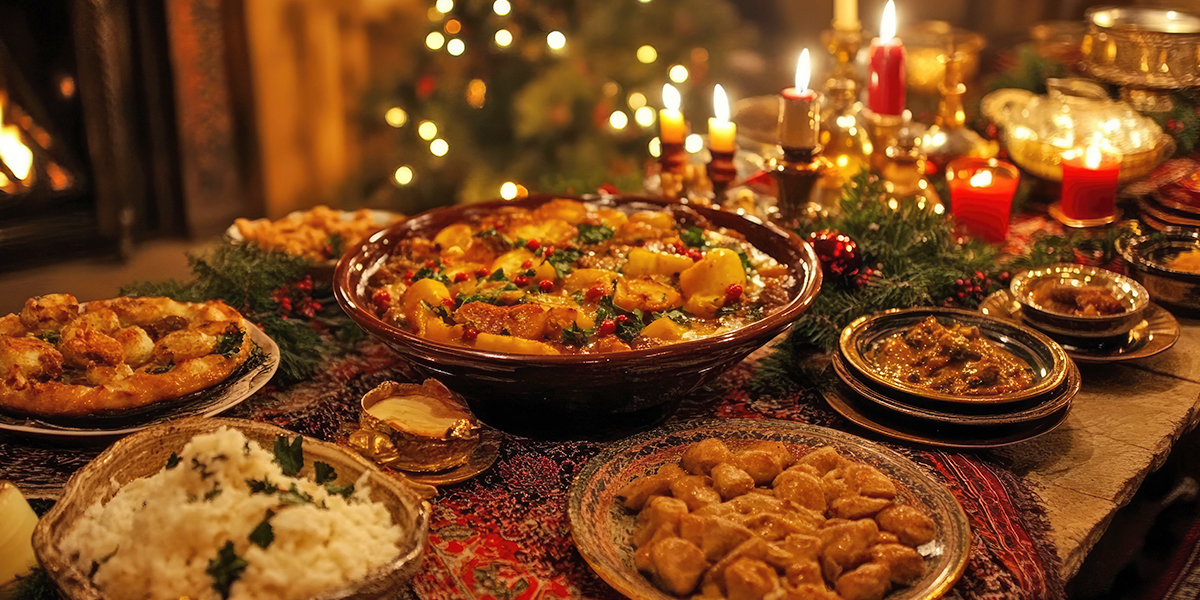
If 2024 was about experimenting with international roast turkeys, 2025 will be recorded as the year India returned home, returned to its roots, returned to the hyper-local. As we approach the holiday season, we’re seeing far fewer imported ingredients brought to the focus, and more of ancestral recipes and indigenous techniques taking the forefront. From the smoked meats of Kohima to the bakeries of Kochi, the Indian Christmas table is getting its own unique regional identity, pushing "generic" holiday food off the menu. Which begs the question…
Is hyper-local the new global?
In Nagaland, the Christmas feast is incomplete without Smoked Pork with Akhuni (fermented soybean). Home cooks across metros have been sourcing smoked pork from specialty vendors to recreate this rich, earthy dish that signifies community feasting.
In Meghalaya, the Khasi community’s Dohneiiong (pork cooked in a black sesame paste) and Jadoh (rice cooked with meat stock and turmeric) have trended as ‘must-try’ festive dishes, replacing standard biryanis in many households. The focus here is on communal eating, large pots of Vawkswa Chhum (Mizoram’s pork and mustard leaf stew) shared among neighbours, the true spirit of the season.
The Kochi style Ghee Cake is gaining popularity. This golden moist cake (often associated with the wide range of multi-cultural bakeries here) saw a spike in recipe searches, surpassing even the traditional rich fruit cake in many homes. For the main course, Duck Moilee reigns supreme.
Unlike the spicier red curries, this mild, creamy stew made with coconut milk and green chilies offers a sophisticated, velvety texture that pairs perfectly with lacy Appams. Meanwhile, the "Kuswar" (a platter of festive sweets) is making a comeback in Mumbai and other metros.
Families are moving away from store-bought sweets to making Neurios (crescent-shaped pastry stuffed with coconut and jaggery) and Kulkuls (glazed dough curls) at home. The highlight, however, was the revival of Bebinca, the slow-baked, seven-layered homemade variety that takes patience, celebrating the "slow food" movement.
Even amidst the feasting, healthier options were prioritised. We’re seeing Millet Kulkuls (using ragi or jowar flour) and Jaggery-sweetened Vivikam (a traditional Puducherry coconut cake). Stay tuned for more festive feasts, including a Weekend Chicken Christmas special!
How are you bringing the festive spirit to the table? Got a festive special recipe to share? Let us know in the comments!
Rate this story:
Tags
Food trends
Regional recipe
traditional recipe
Hyper-local
Christmas recipe
0 Comment
You may also like
-
Travel From Kalwa Tonak to Khatkhate: Celebrating Goa’s Indigenous Flavours on Goa Liberation Day
by Vikhroli Cucina -
Travel How India celebrates Christmas through food
by Vikhroli Cucina -
Travel Culinarian's Take: Floating feni and Saraswat cuisine are bringing a new side of Goa for tourists
by Vikhroli Cucina -
Travel Culinarian's Take: How seasonal harvests are shaping Indian travel
by Vikhroli Cucina