From Kalwa Tonak to Khatkhate: Celebrating Goa’s Indigenous Flavours on Goa Liberation Day
This isn't another guide to beach shacks and Sorpotel. On the occasion of Goa Liberation Day, we’re looking past the colonial influence to find the state's indigenous heart. From river oyster stews to banana flower stir-frys, these are the subtler, traditional flavours that have defined the Goan home for centuries.
29 Dec 2025
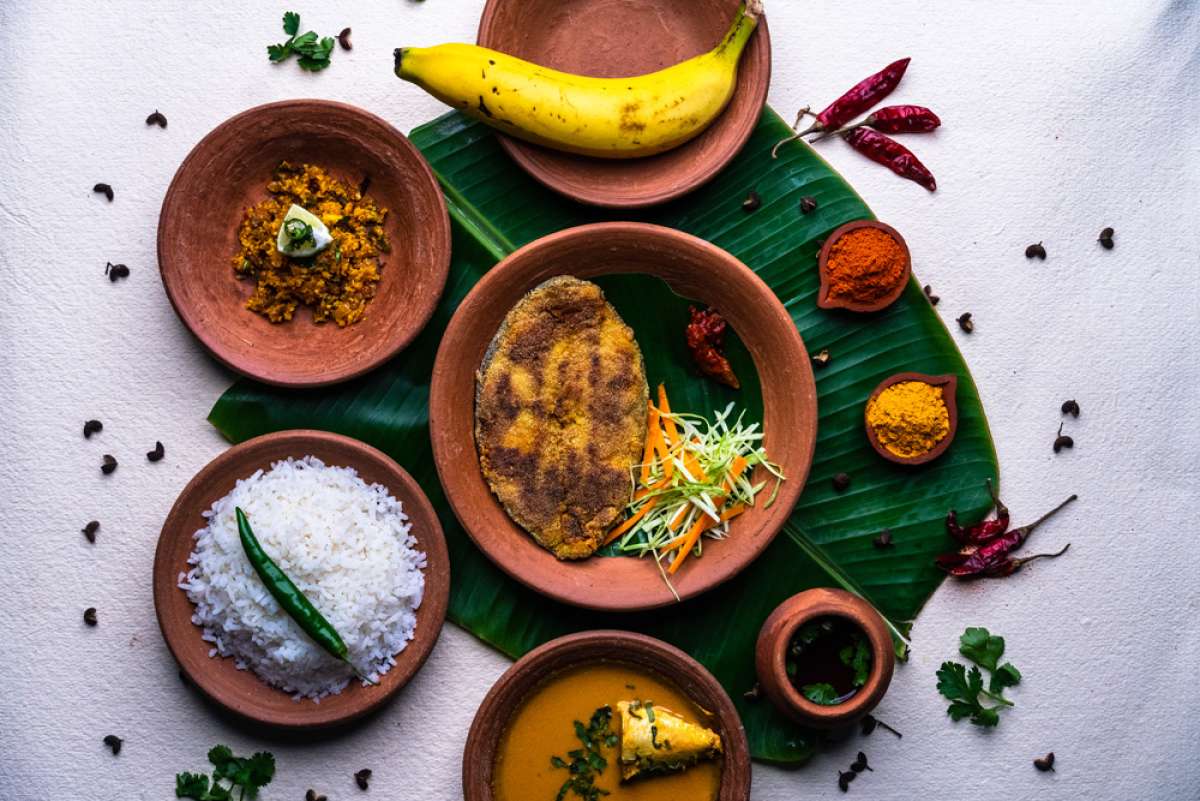
This is not another year-ender touristy piece about Goa and the festivities to come, because we’ve already somewhat covered that angle. This deep-dive, on the occasion of ‘Goa Liberation Day’ is a chance to look at some subtler, mundane and the not-so glamourised food of a quaint, coastal town. There is of course, the undeniable appeal of the Sorpotel, the Vindaloo or the Xacuti, but there is still room to appreciate the more.
The day marks the end of colonial presence in the state and the reintegration of Goa into the country. Dishes like Khatkhate or Dhavi Bhaji (simple amaranth) represent the indigenous roots that survived centuries of colonisation, and that offers more complexity to what we know about this cuisine. Sungtachi Kismoor uses dried prawns, whereas Kalputi uses often overlooked, discarded fish heads.
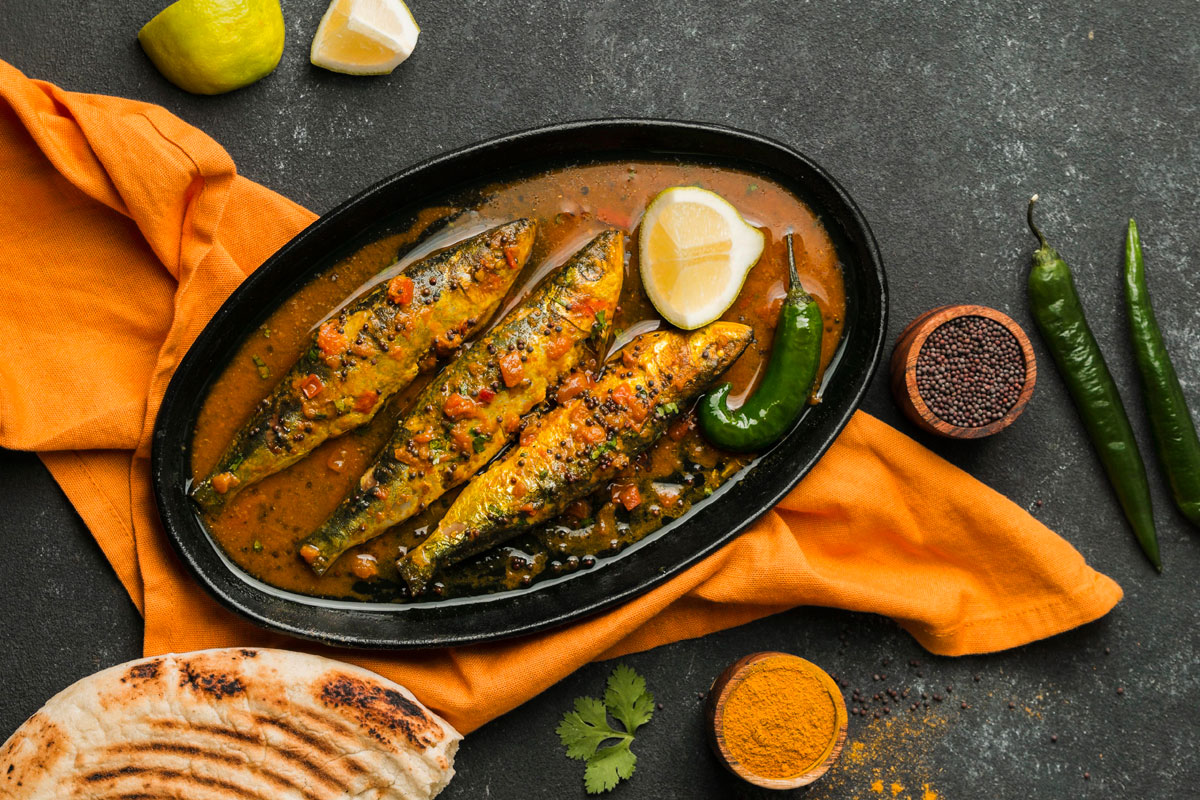
For instance, take a look at the delicious looking traditional Ambot Tik squid curry below. (More on this curry later)
Kelphulachi Bhaji
Also known as bonyechi bhaji, this is a labour-intensive dry vegetable preparation made from the banana flower (kelphul). The key to this dish is the preparation: the florets are removed, and the tough central stamen (kagdi) is manually discarded before the flowers are chopped and soaked in tamarind water or buttermilk to prevent browning. It is then stir-fried with black chickpeas (kala vatana) or soaked chana dal, tempered with mustard seeds and curry leaves, and finished with fresh grated coconut. It has a distinctively fibrous, meat-like texture.
Kalwa Tonak
A thick curry featuring river oysters (kalwa), often cooked with cubed potatoes to absorb the brine. The defining element is the Tonak masala base, made by roasting grated coconut with coriander seeds, dried red chilies and cloves until deep brown, then grinding it into a rich paste. The roasted spices give the gravy a nutty, smoky aroma that complements the saline taste of the oysters. It is best eaten with local bread (poi) to mop up the thick gravy.
Dhavi Bhaji (Green Amaranth)
While Tambdi Bhaji (red amaranth) is common, Dhavi Bhaji uses the green/white variety of amaranth leaves (math). It is called "Dhavi" (white) because it is cooked without turmeric or red chilli powder to preserve its natural green colour. The leaves are steam-cooked in their own juices with slit green chilies, onions and a generous amount of scraped coconut. Some versions include jackfruit seeds or raw papaya for texture. Dhavi vade is another popular delicacy.
Kalputi (Fish Head Semi-Dry)
Typically prepared using the fleshy head and tail of large fish like Kingfish (Visvan) or Pomfret. The fish parts are marinated and cooked in a semi-dry, spicy masala paste containing turmeric, red chili powder and tamarind or kokum to cut through the strong fishy odour It often includes grated coconut added towards the end. The dish is prized for the texture of the fish cartilage and the intense concentration of flavour in the fish head.
Kelyacho Halwo (Banana Sweet):
This sweet dish is made specifically using "Moira Bananas" (Myndoli Kellim), a long, thick variety native to the Bardez taluka. The ripe bananas are sliced into discs and slow-cooked with ghee and sugar (or Madachem Godd/palm jaggery) until the mixture turns a glossy, deep amber. Unlike a soft pudding, the banana slices retain some shape, developing a candied, chewy texture. It is seasoned simply with cardamom and sometimes cloves.
Sungtachi Kismoor (Dried Prawn Salad):
A dry accompaniment that is served with rice and fish curry. Tiny dried prawns (galmo) are roasted in a pan until crisp to remove moisture. They are then tossed just before serving with sautéed onions, fresh grated coconut, tamarind pulp and chili powder. The result is a sharp, savoury, and crunchy "salad" that must be eaten immediately so the prawns don't lose their crispness.
Khatkhate (Mixed Vegetable Stew)
The quintessential festive stew of the Goud Saraswat community, prepared without onion or garlic. It features a base of seasonal vegetables (pumpkin, drumsticks, radish, sweet potato) and corn, cooked together with toor dal. The non-negotiable ingredient is Teppal (Tirphal/Sichuan Pepper), which imparts a numbing, citrusy aroma. The stew is thickened with a coconut-chili paste and typically does not use an oil tempering (tadka), relying instead on the flavour of the boiled vegetables and Teppal.
Ambot Tik (Sour and Spicy Curry):
The name literally translates to "sour" (Ambot) and "spicy" (Tik). This fiery red curry is typically made with meaty fish like shark (Mori) or squid (Mankios). The sourness comes from a splash of Goan toddy vinegar (not tamarind), and the heat comes from ground dried red chilies. Unlike Xacuti or Tonak, this curry usually contains no coconut (or very little coconut milk), resulting in a sharp, tangy gravy that is perfect for preserving the fish for a day or two.
Which of these delicacies are on your list next time you go to Goa? Let us know in the comments!
Rate this story:
Tags
Seafood
traditional recipes
Goan Saraswat cuisine
Culinary Heritage
Regional Indian Food
Goa Liberation Day
Goan Cuisine
Indigenous Food
Vegetarian Goan Food
0 Comment
You may also like
-
Travel How India celebrates Christmas through food
by Vikhroli Cucina -
Travel From Kohima to Kochi: What India cooks at home during the holiday
by Vikhroli Cucina -
Travel Culinarian's Take: Floating feni and Saraswat cuisine are bringing a new side of Goa for tourists
by Vikhroli Cucina -
Travel Culinarian's Take: How seasonal harvests are shaping Indian travel
by Vikhroli Cucina