A Table chez Anou, Geneva’s Only Plant-Based Chef's Table
With the central theme of this year’s Godrej Food Trends Report spotlighting the power of 'storytelling', we speak to Chef Anou, the visionary behind Geneva's only plant-based chef's table, À Table chez Anou.
22 May 2026
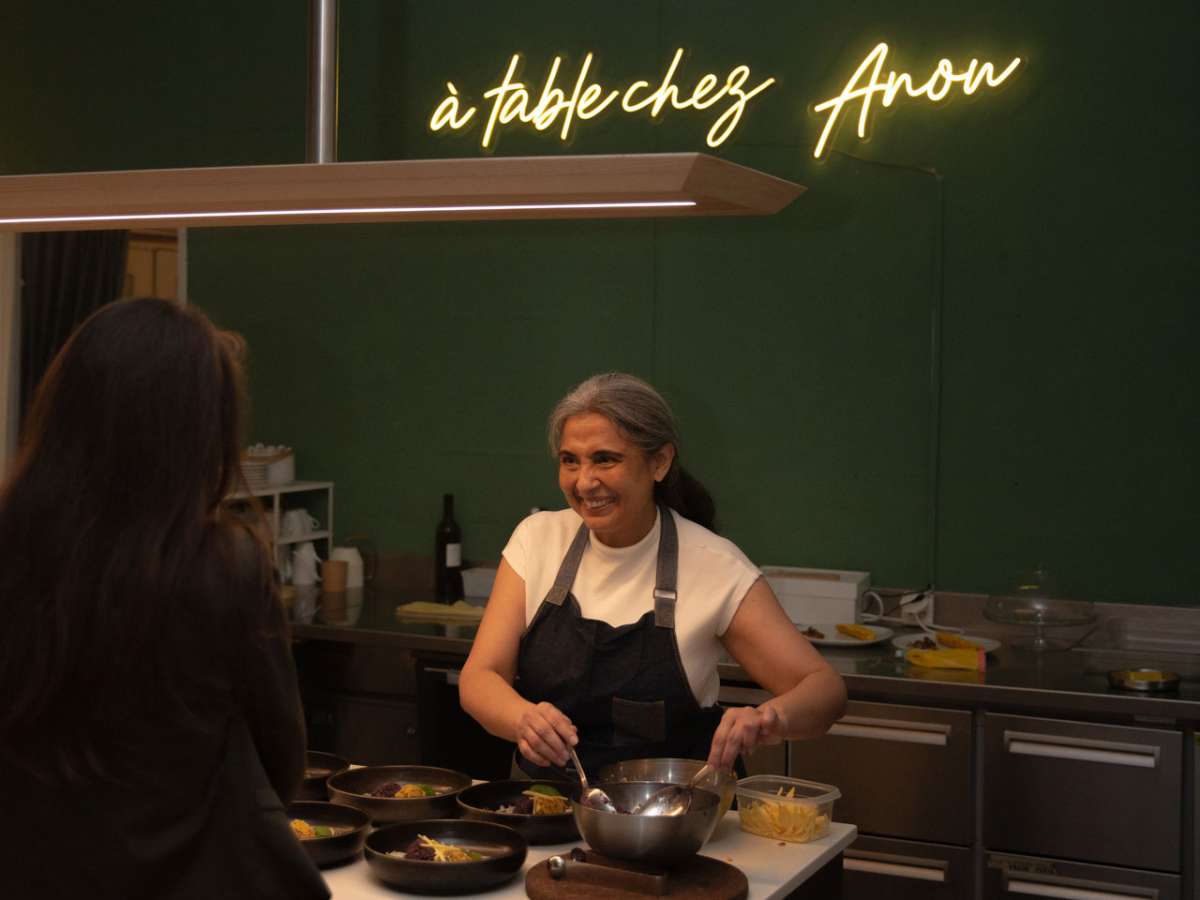
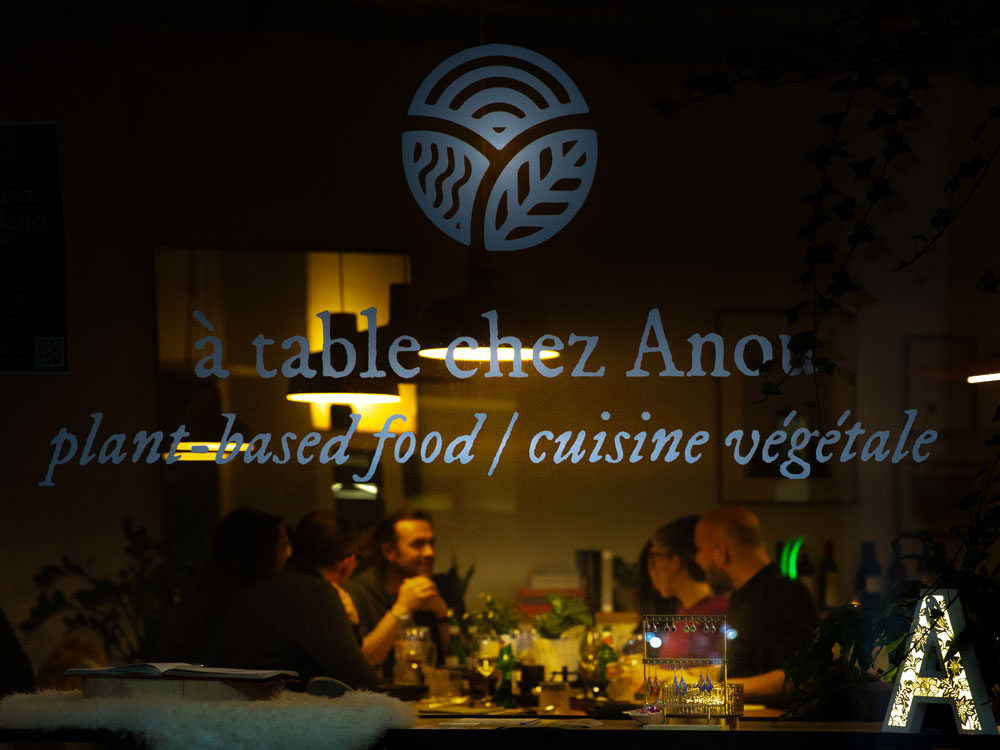
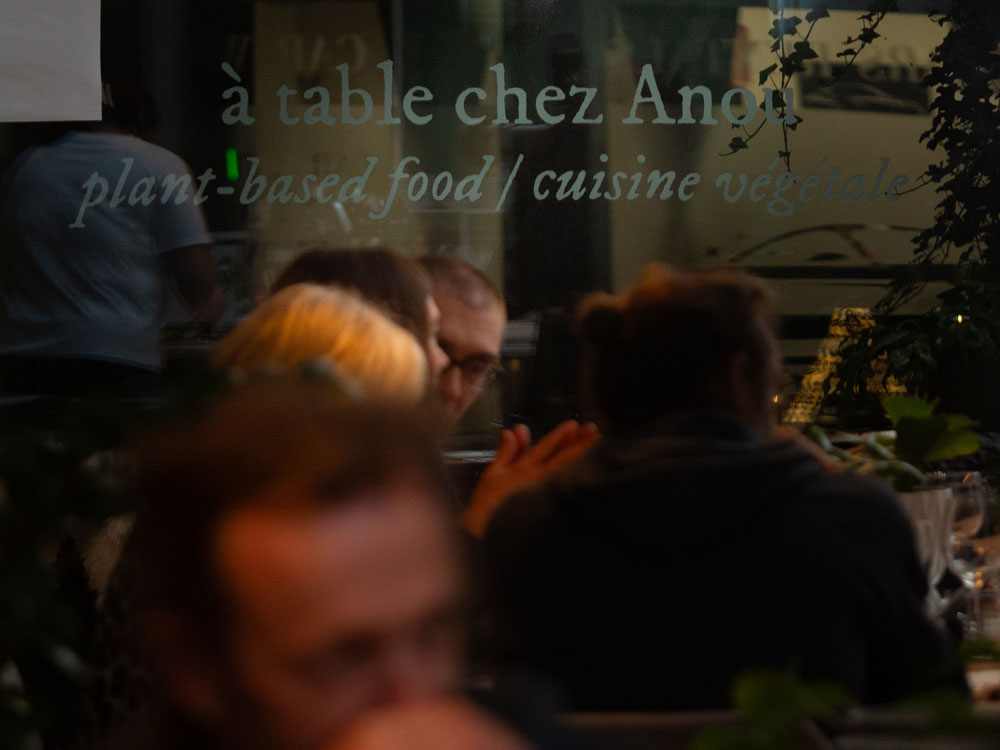
À Table chez Anou is Geneva's only plant-based chef's table, it is Chef Anou’s intimate and curated table d'hôte that she has been running for 11 years on the shores of Lake Geneva.
With the central theme of this year’s Godrej Food Trends Report spotlighting the power of 'storytelling', we arrive at Chef Anou’s culinary approach.
In our conversation, she shares her secrets for starting a conscious kitchen, explains why a meal must engage all five senses, and reveals how the simple act of sharing a thoughtfully crafted meal with strangers can be the ultimate catalyst for a lifestyle shift.
Your table d'hôte on the shores of Lake Geneva is such a unique setup. To start off, what drew you to creating this very intimate, shared dining experience centred around plant-based ingredients?
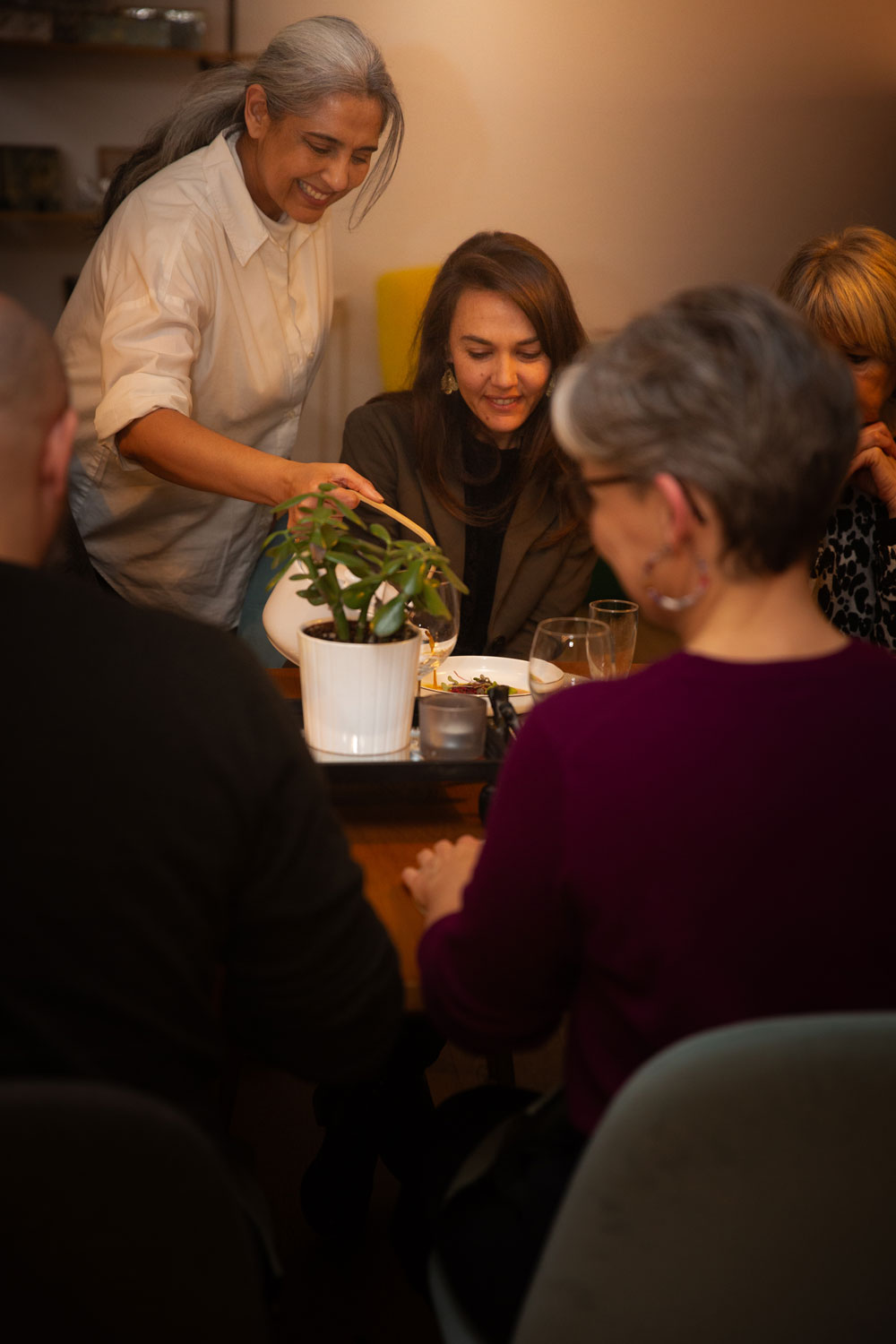
It started with rethinking dining as an immersive experience, where you discover new flavours, textures and techniques in the company of like-minded people. So, for instance, here, you’re eating zucchini or pumpkin in a way you least expect. Suddenly the diner sits there thinking, 'Oh my God, is that really zucchini I'm eating? I never knew it could be prepared this way.' Creating that moment of ‘aha’ was very important to me.
Secondly there is a social element to dining which I found missing. There is an Italian saying which goes: "A tavola non s'invecchia", which translates to "At the table, you never grow old" and I truly believe in it, as growing up I remember we always had more than just our family around our dining table.
I was certainly pushing the boundaries, when I started hosting my dinners. First, I expected them to come to a ‘home’, second, I chose what they ate, and they had to share a table.
I curated an experience that I strongly believed in, and I urged my diners to engage and what I learned was that I was creating something people were craving. It was a perfect market-fit. My entire business has grown around word of mouth.
What is a simple habit a home cook can adopt to make their daily meals more conscious and harmonious with nature?
Cook with hyperlocal ingredients. Start with what’s in the fridge and use by date products. If you are shopping, create a menu so you only buy what you intend to cook. Shop when you cook and cook when you shop. It’s the best way to reduce waste. Also use every part of the vegetable to reduce food waste and compost what you can’t.
When you look at the local farms around Lake Geneva, what is one such hyper-local ingredient that you are most excited to cook with right now?
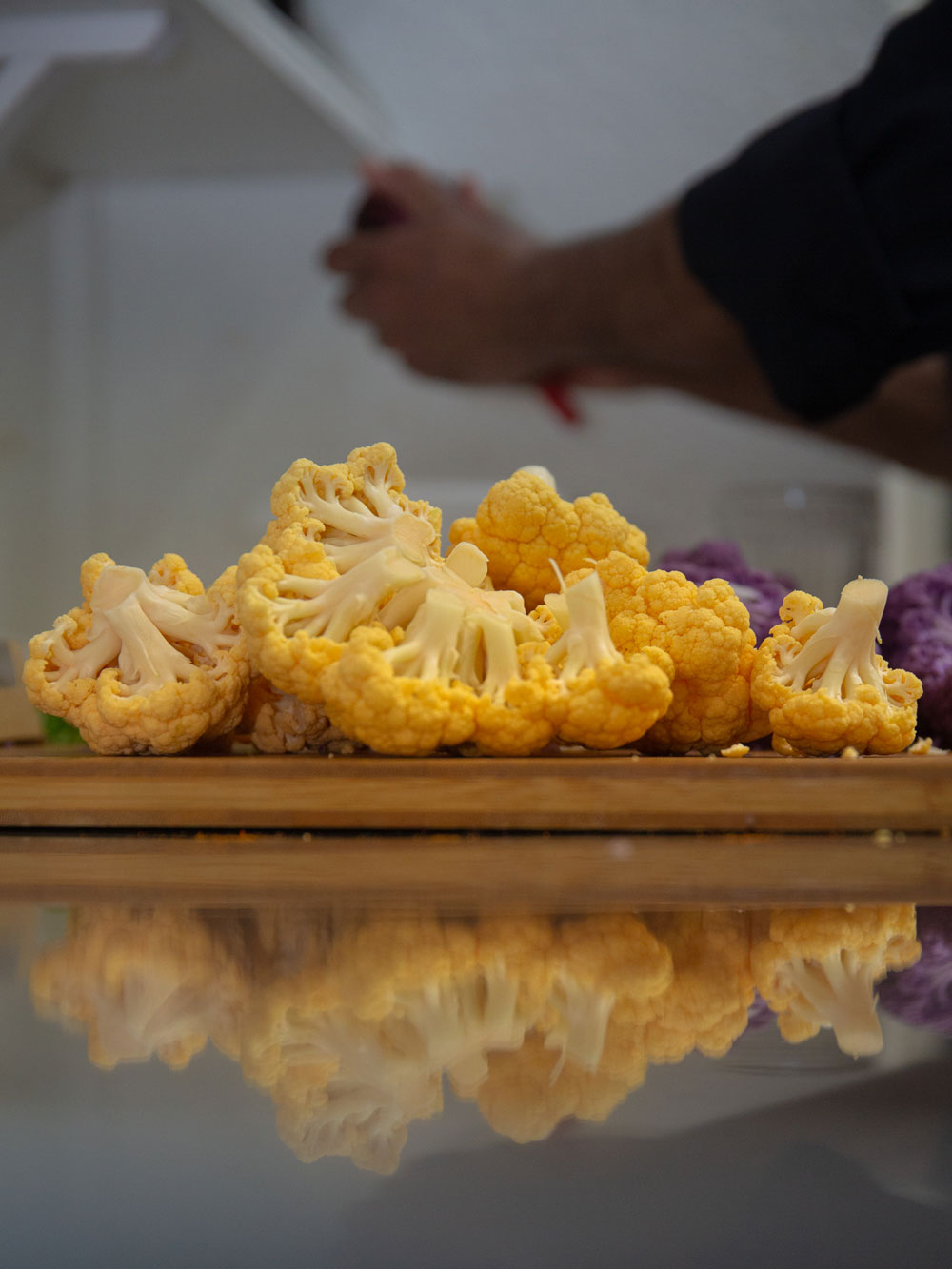
Right now, we are in the cauliflower season. We are sort of in-between spring-summer, so we get beautiful purple and yellow cauliflower. One of my favourite ways to bring out the colour and texture is making bi-color cauliflower kheema which is served on a neer dosa topped with herby tomato salsa.
The other produce that is very much in season right now is wild garlic. We make wild garlic oil, sauce and pesto.
I also like adding nuts and seeds to my dishes, it adds texture and is filled with nutrients like pumpkin seeds, almonds, sunflower seeds, poppy or toasted buckwheat.
You’ve mentioned texture and the transformative quality of vegetables. How does engaging the senses play into conscious dining and making sure a plant-based meal feels deeply ‘sufficient’?
Learning how to transform simple vegetables into gourmet goodness is a talent.
Using that transformative quality of vegetables is what makes vegetables interesting.
For example, you make a drilled vegetable today and tomorrow you can turn it into a sauce or chutney.
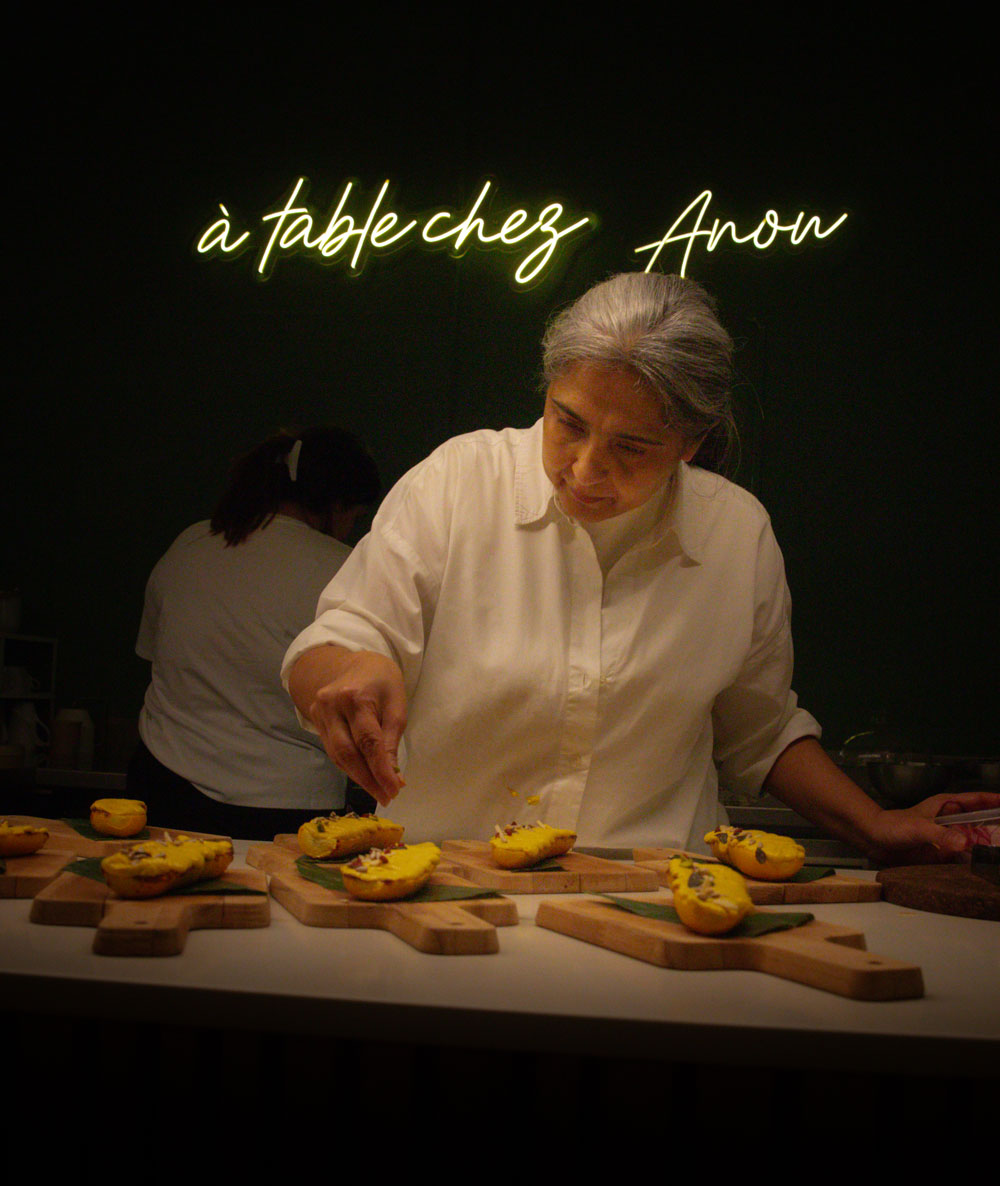
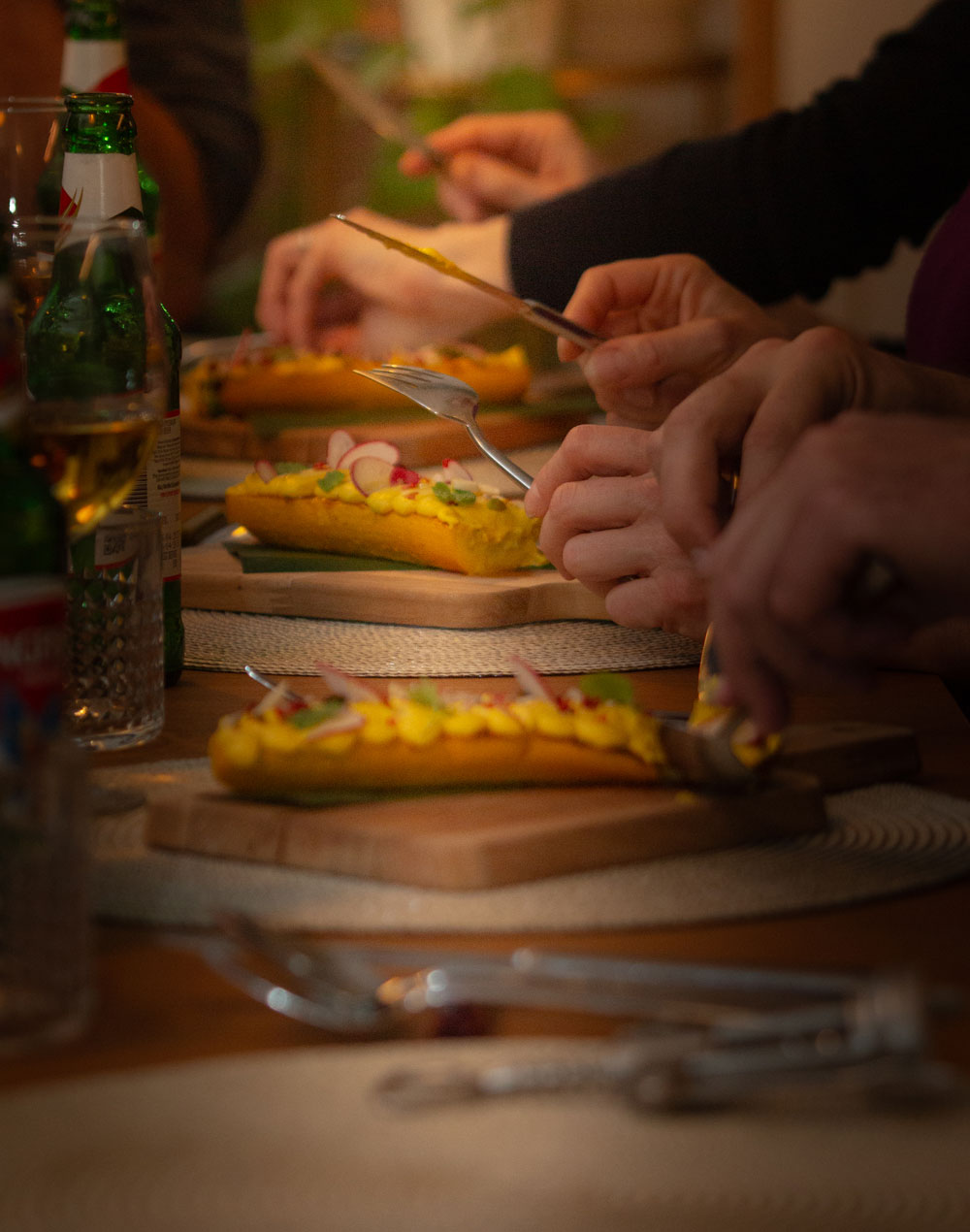
When eating your food, you have to use all your five senses. The first, of course, is your eyes. Because when you see food looking beautiful and inviting, you want to eat it. The second is touch, you can feel the texture and temperature of the food which is very important. I think a lot of times we lose that when we have forks, knives and spoons. I tell my diners - “you have only heard of finger-licking good”, not fork licking good! So you know where the secret lies!
And then the next, of course, is your nose. Because when you take food close to your mouth, your nose gets active! it tells you right away if something is good or not. And then when you put food in your mouth, it's your taste buds... when you taste the umami. And last but not the least, it's your ears. When you bite into something crunchy, you bite into something soft, your brain then tells you that there's something in your mouth you're eating, and basically it also needs to then start going into the digestive mode.
How do these sensory elements define what genuine 'conscious dining' actually means to you?
Conscious dining is where you know where you're sourcing your food from. So that's the sustainability aspect of it. Then there is the social aspect, which is who's cooking your food? What is the intention of the person who's cooking your food? For instance, when I think of my mom's kitchen, there's love, and devotion. Then of course, who you're eating with. If you know what you're eating, and the story behind the plate and what's gone into it, then the way your body processes that food becomes a deeply nourishing and positive experience.
Is there an overlooked ingredient or vegetable that you’ve managed to transform into the star of your meals?
Skins! I love working with the skin of various vegetables. Pumpkin, and watermelon for example, turn into great poriyals.
We also always use a lot of zucchinis. We grow them ourselves. We sometimes stuff them with tofu scramble, which is something that people really love here. Another version of zucchini that we do is we grill it with Japanese flavours, and then we make a mousse with the tofu on top.
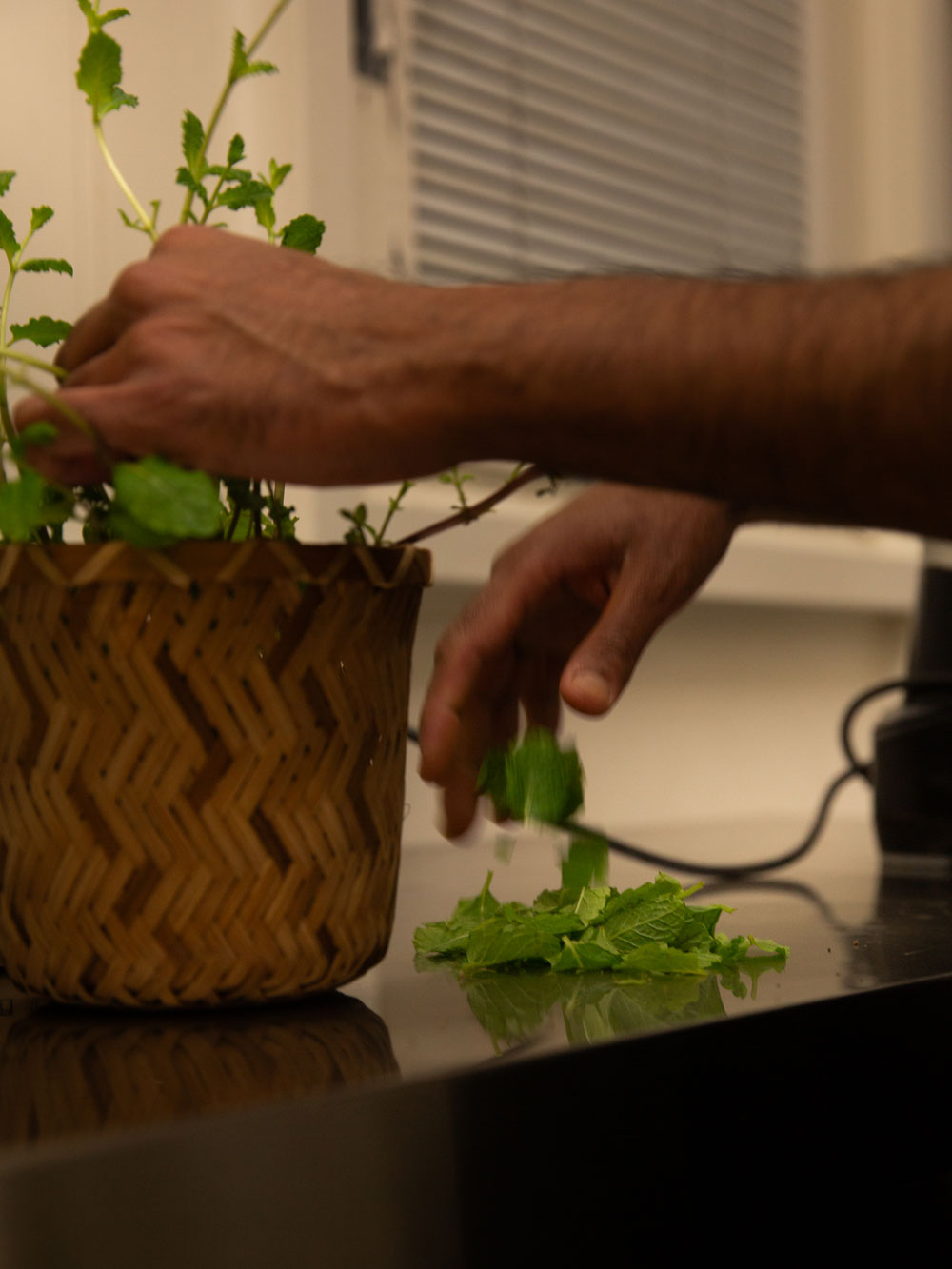
Sprouts, I think, are also quite overlooked. They're called "live food," because they're still growing. You can actually watch them grow and be involved in the process. You may not be able to grow a full garden, but you can definitely grow sprouts. Using ingredients you grow yourself creates a special connection with your food and enhances the entire experience.
How does your background in architecture influence the way you conceptualise a meal and design the dining environment for your guests?
At À Table Chez Anou, my architectural background shapes both the space and the plate.
The dining environment is designed to feel intimate, warm, and human-scaled—more like a private home than a restaurant. Every element encourages connection and ease, allowing guests to relax and engage fully with the experience.
On the plate, I think the same way: each dish has a clear focal point that draws you in, with everything else built around it in balance. Like architecture, it’s about intention, harmony, and creating something that people don’t just see or taste—but truly feel.
Gathering fourteen people around a table is such an intentional and intimate act. What kind of mindset shifts or ’aha’ moments do you notice in your guests as they progress through the meal?
They can't believe that they've eaten a vegetable that they're not used to, without even thinking about it! And they've actually loved it. Also, I have a lot of people who have said to me, that are usually meat eaters, 'If I could get vegetarian food like this every day, I would become a vegetarian.' I think for me, that is a really strong statement for someone to make.
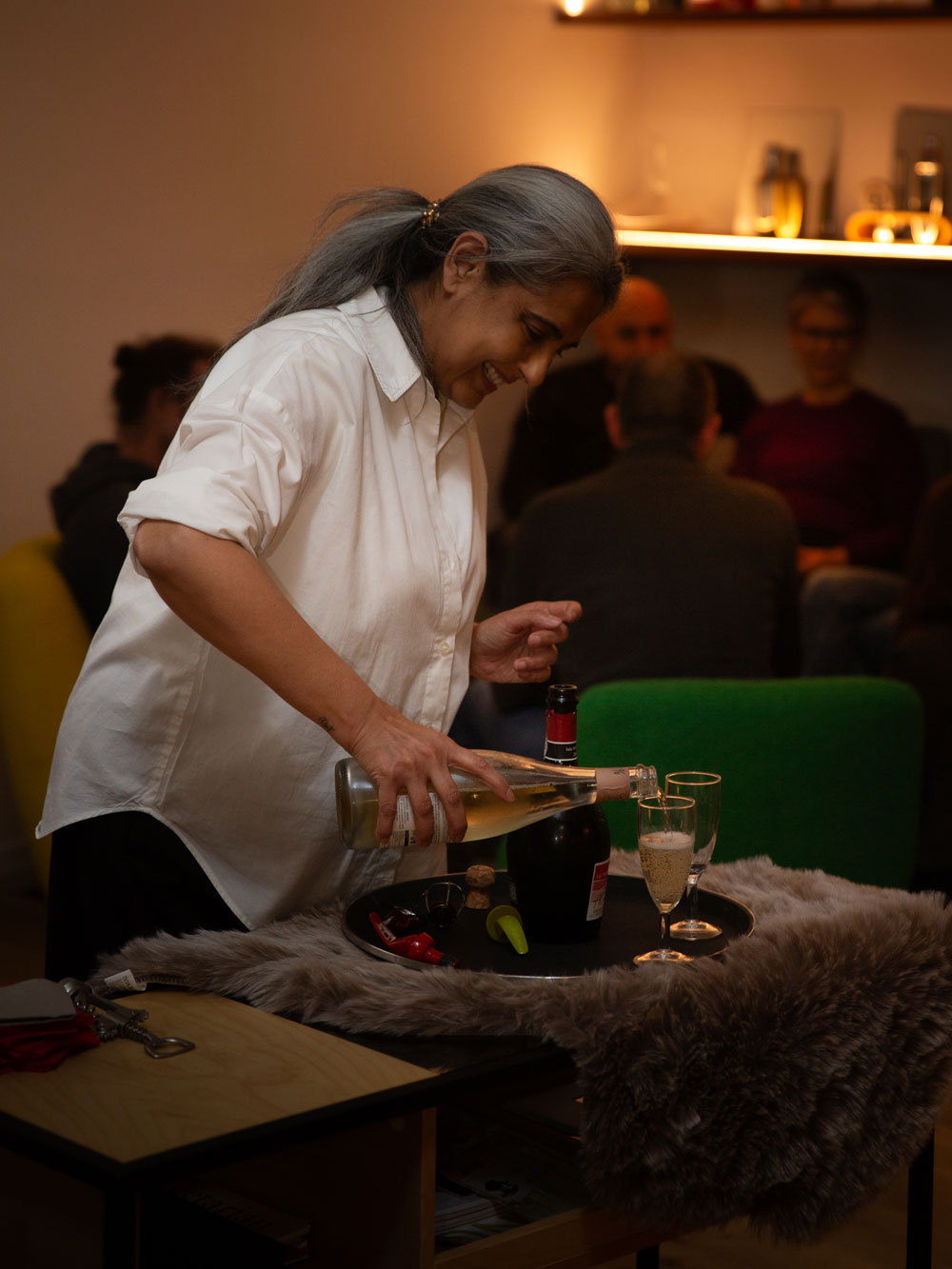
And of course, I think the aha moment is the fact that they can come and sit with strangers and become friends at the end of the day. It's a huge aha moment for my diners here because people generally are not so proactive with talking to strangers. In the beginning, there is a lot of apprehension. But by the time the first course is served, there's been a transformation. So it's a transformational journey at the table every single time. I have a statement that I like to make to my team is that they go from 'ah' to 'aha'.
If someone in India wanted to adopt your philosophy of conscious living or start their own supper club, the local ingredients would obviously look different. What is the first step they should take to adopt the À Table chez Anou lens?
If you're hosting it at home, I think one of the key things to remember is that hygiene is really, really important. You always have to make sure that you put the best intention into the dining experience. Don't do it just to please the guests, do it because it's the right thing to do. And I remember there was a statement that I read when I was like five or six years old, and I've lived by it all my life, which is "Do the right thing when no one is looking."
I’d say, it's what happens behind the scenes that matters. If you are able to get that right, you'll be able to sustain yourself for much longer, because you'll always have people coming back because they see the attention to detail.
Have you ever had to compromise on a certain flavour profile you wanted because of the ecological cost of an ingredient?
A chef does not have to think about getting an ingredient from thousands of miles. The chef will only look at the ingredients that they have on hand. So this is not a challenge. There's no giving up on anything. You start with what you have and then you build the flavours around it. There is no question of a compromise. That's the nature of the dish. The dish decides what it wants and how it will grow and how it will become and what it will taste like.
A dish comes alive in the chef's hands. In the sense that all the ingredients and everything that the chef has decided at that moment to put in it is what makes that dish, what it is. So there's no compromise anywhere. There are no mistakes. It's how you transform something that makes it to the memory bank.
What are the non-negotiable pantry staples, specific ferments, infused oils, or local Swiss preserves that you always keep within arm's reach?
Olive oil is non-negotiable—it’s both a base and a finishing touch, something that brings balance and cohesion to a dish.
Salt is just as essential. There’s an Indian saying, “namak khaya hai,” which speaks to trust and depth—because the right use of salt is what it takes to reveal flavour.
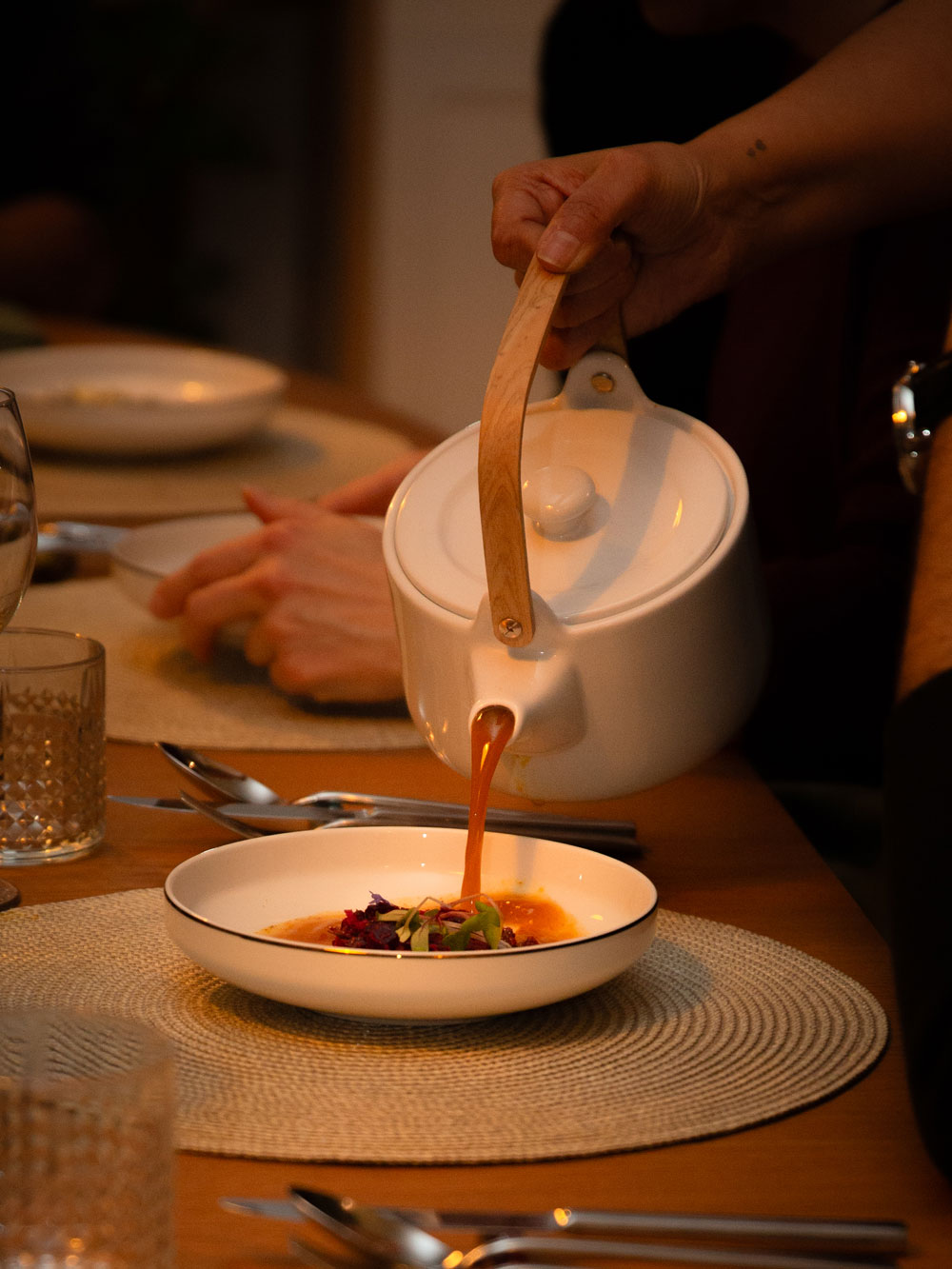
Beyond that, I always have a few high-impact elements within arm’s reach: a house chilli oil, chimichuri, herb oil, marinated orange olives and nutritional yeast. Those are the components that add immediacy and complexity—allowing a dish to feel layered, even when it’s minimal.
Are there specific low-energy cooking techniques or specialised equipment you rely on to ensure the preparation of your 6-course menu has a light ecological footprint?
Smoking is one of the key techniques I rely on.
Working with induction, we don’t have natural fire or charcoal, so I use a smoking gun to bring that missing depth back into the food.
I mainly smoke vegetables to add an earthy, subtle complexity—something that grounds the dish and brings a sense of warmth that would otherwise come from open fire cooking.
Interviewed by Dhruv Nimbalkar.
By championing overlooked ingredients, minimising waste, and designing meals that engage all five senses, Anou challenges us to rethink our daily habits in the kitchen. So, whether you are exploring local seasonal produce in India, hosting an intimate weekend supper club, or simply cooking a weeknight dinner with what is left in your vegetable drawer, the magic happens when you bring intention to the plate.
Rate this story:
Tags
Chef interview
Godrej Food Trends Report
plant-based food
Conscious Dining
Geneva
Culinary Storytelling
Supper Club
0 Comment
You may also like
-
People Malaika Arora’s Sweeney Bombay is redefining the idea of comfort food
by Vikhroli Cucina -

People Godrej Food Trends Report 2026: Sourish Bhattacharya on Tracing the Roots of What We Eat
by Dhruv Nimbalkar
-

People The air fryer effect on Indian home cooking
by Vikhroli Cucina -

People Chef Vanika Choudhary: Cooking with memory, land and time
by Vikhroli Cucina