From Kannivu Ari to the Mulbagal: Are we seeing a revival of rare dosas in Mumbai?
For most Mumbaikars, the 'dosa' definition ends at sada, masala or Mysore. But the city's palate is evolving. We arewitnessing a revival of 'micro-regional' varieties, heirloom recipes like the Mulbagal and the Madurai Kari dosa that are stepping out of small southern towns and royal kitchens into the metro cities.
21 Jan 2026
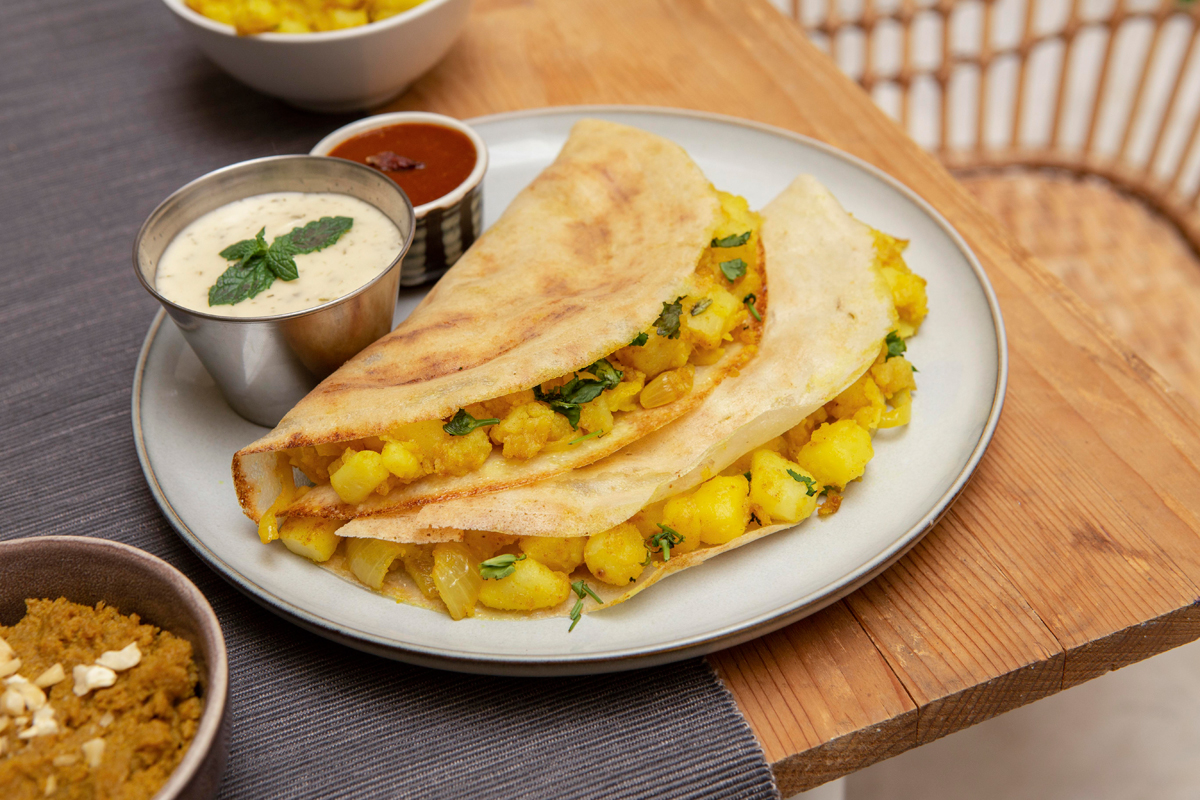
Dosas for Mumbaikars mostly mean a few things, it’s either the flat, crispy sada dosa, the masala stuffed variety of the same, the ‘Mysore Rava’ or the Uttapam! But we’re looking at a different, a bit more complex variety of dosas that are making an appearance across the city. These are what we would call ‘micro-regional’ dosas, they have history, these are heirloom recipes that were once confined to temple towns or royal kitchens or trading communities.
The Kannivu Ari (Black Rice) Dosa
To understand the Kannivu Ari (or Karuppu Kavuni) dosa, you have to go back to the days of the Nattukottai Chettiars. This trading community brought the "black grain" back from their voyages to Burma (Myanmar) and China, where it was often known as "Emperor's Rice" or "Forbidden Rice," reserved exclusively for royalty due to its high nutritional value. For generations, this rice was strictly used for sweet puddings (halwa) at Chettiar weddings. Today, it is also being used in dosas. A Kannivu Ari dosa has a nutty flavour and a deep purple black colour. It is heavier and earthier than a white rice dosa, often served with spicy kara chutney to cut through the richness of the grain.
The Mulbagal Dosa
This legendary dosa dates back nearly 90 years (circa 1930s), largely credited to local families like the Arya Vysyas. The defining feature is the cooking technique: the batter is poured onto a heavy cast-iron tawa, roasted on one side to a crisp brown, while the centre remains thick and is steam-cooked. Once only known to the travellers on the Old Madras Road, the Mulbagal Dosa has now entered the urban food scene of the metro cities. It is slightly smaller and thicker than a standard dosa. The unique texture comes from the high heat of the cast iron and a generous smear of red chili chutney and ghee during the cooking process. It is almost never served with sambar, only chutney.
Davangere Benne Dosa
Often confused with the Mulbagal dosa, the Davangere Benne Dosa comes from the city of Davangere in central Karnataka. Unlike the Mumbai "Butter Sada," this uses white unsalted butter (Benne) dolloped on a batter made of rice, puffed rice (mandakki) and maida. It is served with pale, spicy potato palya and coconut chutney.
Madurai Kari Dosa
The Kari Dosa is one for late-night feasts in Madurai. Unlike its potato-stuffed ‘masala’ version, this is a thick, fluffy uthappam topped with an omelette and then piled high with Kari (minced mutton or chicken chukka), finished with a sprinkle of coriander and curry leaves. It is technically a "three-layer" dosa. For years, "South Indian" in Mumbai meant vegetarian Udupi. Now, with the rise of Chettinad and non-vegetarian coastal kitchens, the Kari Dosa is finding its place as a brunch or dinner item.
Mushti Polo
"Mushti" means "fist" in Konkani/Kannada. This dosa is named so because the ratio originally required one "fistful" of varying lentils or poha. It is the antithesis of the crispy paper roast. The Mushti Polo is thick, snow-white and incredibly soft/spongy (like a cloud). It is cooked only on one side and ferments to develop a honeycomb texture that soaks up chutney like a sponge. As people get tired of the oil-heavy "roast" dosas, the zero-oil (or low oil), gut-friendly Mushti Polo is making a comeback as a "comfort food" breakfast.
Vellayappam
Most Mumbaikars know the "Appam" (the lace-edged bowl shape). But the Vellayappam is its not-so-distant cousin, a flat, slightly thicker pancake made with fermented rice batter and coconut. Traditionally, it was fermented using toddy, which gave it a distinct sweet-sour tang and unparalleled fluffiness. Kerala restaurants are bringing this back as a distinct item from the "Palappam" (lace appam). It’s gaining traction because it holds heavy gravies (like stew or roast) better than the delicate lace appam.
Which of these dosas are on your list the next time you want to get a fix? Let us know in the comments!
Rate this story:
Tags
Food trends
heirloom recipes
South Indian cuisine
Mumbai food
Indian Breakfast
Dosa
Micro-regional Food
Mulbagal Dosa
Madurai Kari Dosa
0 Comment
You may also like
-

Features This is what Ganesh Chaturthi tastes like in a Konkani home
by Vikhroli Cucina -
Features Mumbai: A First Look Inside the Future of Indian Dining
by Vikhroli Cucina -
Features Mapping the next decade: Rushina Munshaw-Ghildiyal on the road to GFTR 2027
by Vikhroli Cucina -
Features How Eleftheria is Putting Indian Cheese on the Global Map
by Vikhroli Cucina