How we rediscovered Chutney at the Kala Ghoda Arts Festival with Rushina Munshaw Ghildiyal
A few days into the Kala Ghoda Arts Festival, culinary chronicler Rushina Munshaw Ghildiyal took the stage to present her new, meticulously researched book, Chutney
24 Feb 2026
This has been a labour of love, one that took over two years to compile, the compendium features 140 contributors and 230 recipes mapping India from north to south and east to west. But more than just a recipe book, the session uncovered the fascinating history, nutritional science and practical magic of India's favourite accompaniment.
Etched in stone
While the rest of the world often thinks of chutney as a cooked, sweet-and-sour preserve the authentic Indian chutney is predominantly a fresh creation.
Historically rooted in Ayurveda, the word chutney originates from chatan or tulik, referring to a small, lickable accompaniment. In fact, beloved culinary terms like chaat and chatpata also derive from the word chutney. Long before the English word became widespread, these accompaniments were and still are recorded under various regional names like thecha in Maharashtra, thogayal in the south and catni.
As Indian labourers travelled to places far and wide, like Mauritius and the Reunion Islands, they took their recipes with them. In the south, chutney was called Satni, which evolved into Mauritian staples like Satni Coco (coconut chutney) and Satni Pistachio (which is actually made from peanuts).
The science of Taseer
But chutney, as we found out, was far from being just a flavour enhancer, traditional chutneys act as functional medicine. A traditional Indian chutney was designed to incorporate all six tastes (shadras), serving as a palate cleanser that stimulates digestive juices.
The discussion broke down the Ayurvedic concept of taseer — the inherent heating or cooling quality of foods. For example:
In Uttarakhand, warming ingredients (garam taseer) like sesame (til) are ground into a chutney and paired with cooling ingredients (thanda taseer) like radish (mooli) or udad dal to aid the body's digestive process.
Regional ingredients pack a massive nutritional punch. Bhang (hemp seed) chutney, a Himalayan staple, is completely non-intoxicating and serves as one of the highest vegetarian sources of Omega-3. Meanwhile, sesame seed (til) is heavily utilised for its rich calcium content.
Chutneys have long championed sustainability. The commonly made tori ke chilke ki chutney uses the peels of ridge gourds, transforming what is often considered kitchen waste into a high-fibre side dish.
The home kitchen
While the new book meticulously catalogues hundreds of recipes, the true essence of chutney is in its fluidity. As Rushina explained, "We've got 230 recipes for sure in this book. But there are probably thousands of recipes we don't have and thousands which we'll never write down because they're just made in someone's kitchen somewhere else".
The audience was treated to two unique chutneys:
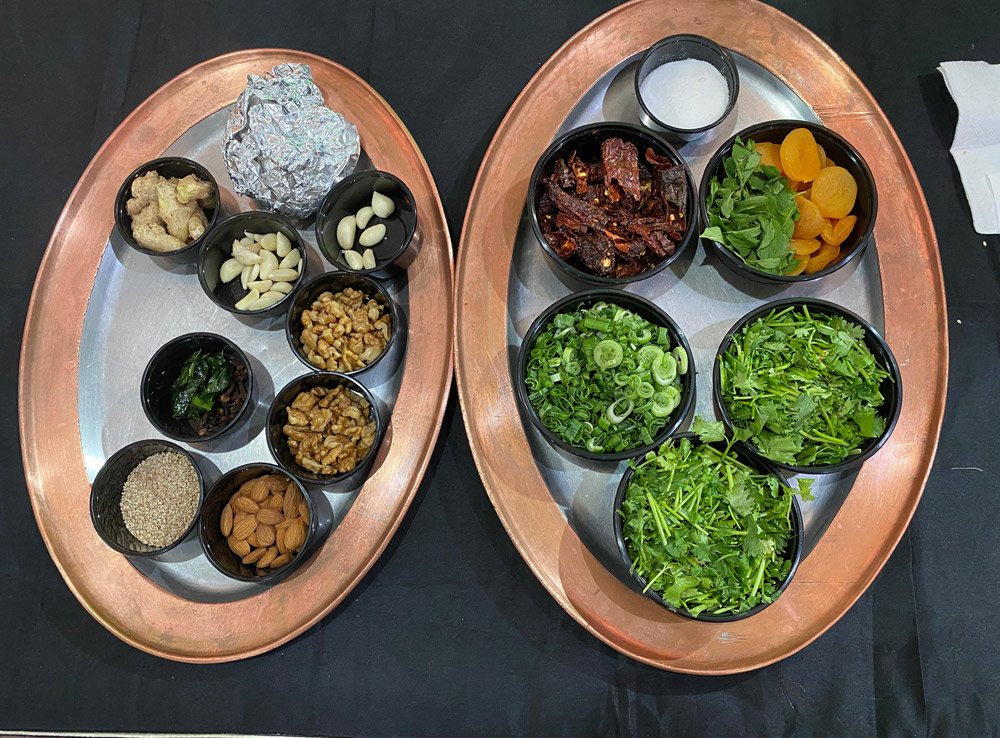
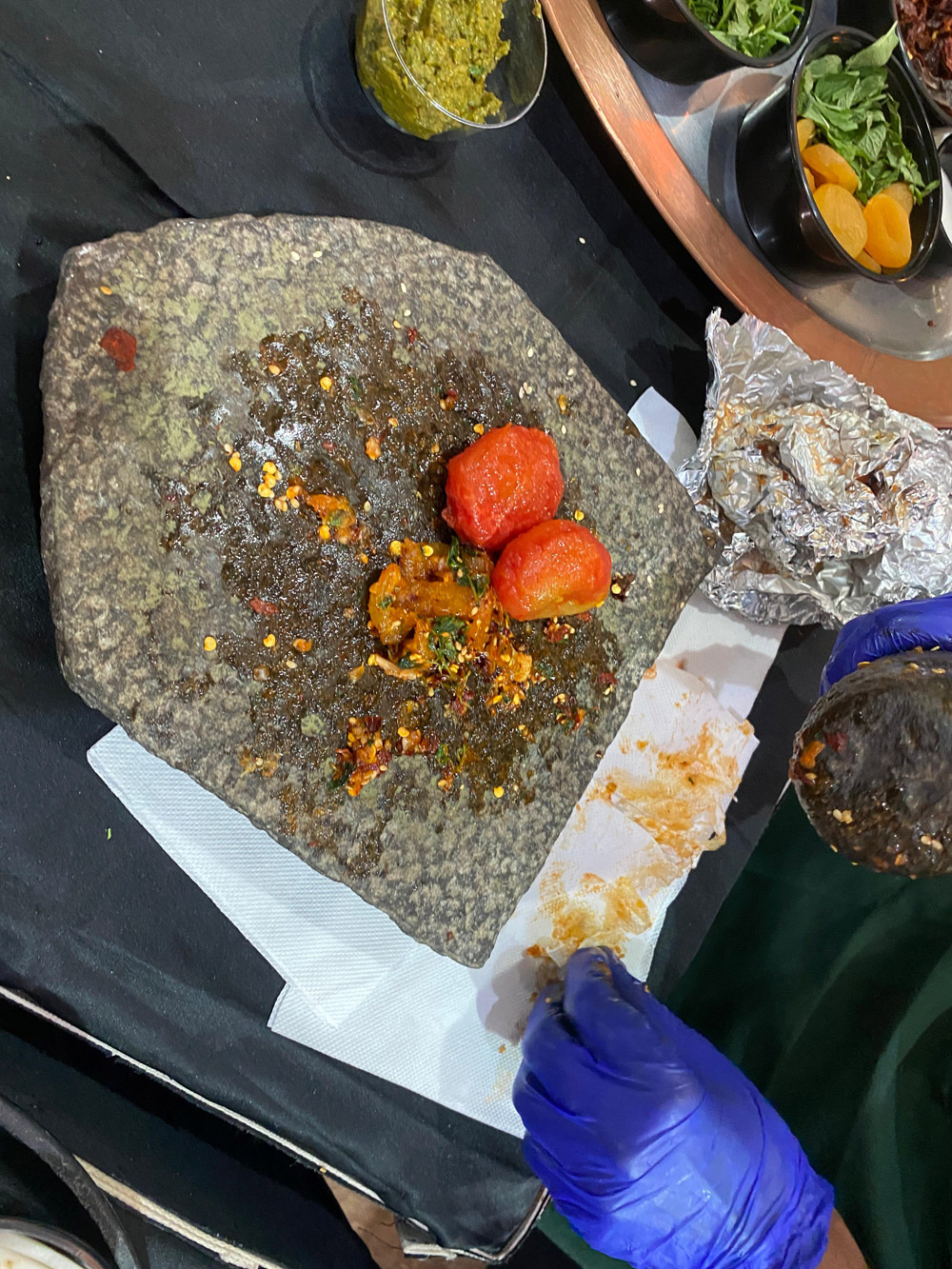
Chulu Chutney: A sweet and sour blend made from Himalayan apricots (chulu), walnuts, almonds, roasted tomatoes and a pungent local herb called gandela (similar to curry leaves).
Til Mooli Chutney: A deeply aromatic mix relying on roasted sesame seeds, cumin, ginger, garlic and lime juice, meant to be eaten with pieces of radish.
There was also a spirited discussion on tools. While the romance and superior texture of a traditional silbatta (stone grinder) are undeniable, modern convenience holds its own. Rushina champions the mixer-grinder for everyday use, advising, "...which is why I always say that you have a blender, use it, at least you will be doing more chutneys, more variety, even if you're not doing it on the silbatta".
Making chutney in large batches
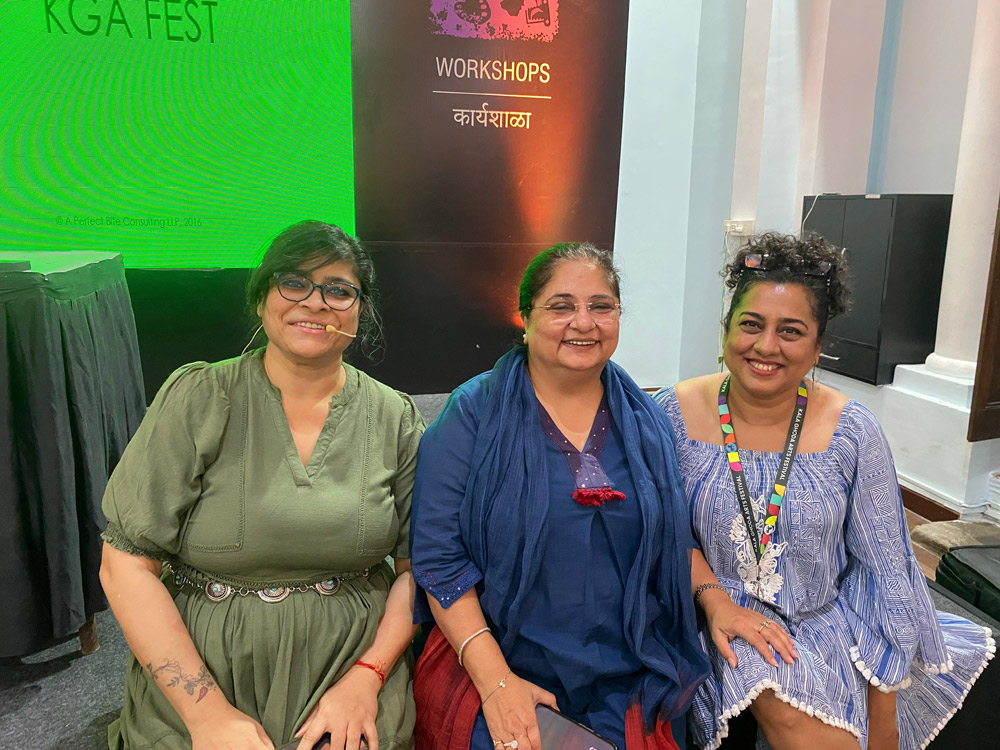
Pinky Dixit, the visionary behind beloved Mumbai restaurants Soam and Aamchi says that chutneys are about elevating everyday dining: "Likewise, with every dish that we serve, we try and sort of enhance it and give it more love by adding something that you would enjoy with it."
She shared valuable tips for handling condiments in a large batches, which also translate perfectly to home kitchens:
Hold the salt: "So normally what we do in a commercial setup, we swap the salt, the chutney or the relish last before it goes out, because all the ingredients tend to lose water".
The oil: If salting early is necessary, Pinky suggests adding a little oil because "It binds the salt and the water together to create an emulsion".
Seal it up: When storing chutney in the fridge, top it off with oil so "you don't have any air in it" to prevent spoilage.
Keep it fresh: Above all, Pinky recommends restraint: "And the other thing is to make small batches so that they're fresh, they're fun, and they're at their most prime to be enjoyed".
Beyond the condiment
We tend to take chutney for granted, viewing it as a sidekick. But it is so brilliantly versatile. At Aamchi, classic street food is reimagined through condiments, serving mini vada pavs with four distinct chutneys: methkut, green thecha, red thecha and a chilli pickle. The menu also playfully integrates chutneys into modern formats, like a rasam ramen dusted with curry leaf podi, and momos in a misal broth alongside kanda lasun masala chutney.
Whether acting as a flavour bomb for instant noodles, elevating a simple sandwich, or accompanying a comforting bowl of dal chawal, chutney remains a deeply personal, functional and historical culinary art form.
Rushina perfectly summed it up, towards the end: "But the fact is that you will eat a meal, you will forget the meal, you will not forget the chutney in the meal".
What chutney do you use to spice up your meals? Do any of the above-mentioned chutneys sound familiar to you? Let us know in the comments!
Rate this story:
Tags
Rushina Munshaw Ghildiyal
Cookbooks
Ayurveda
food history
chutneys
Regional Indian Food
Kala Ghoda Arts Festival
Indian Condiments
Pinky Dixit
Zero Waste Cooking